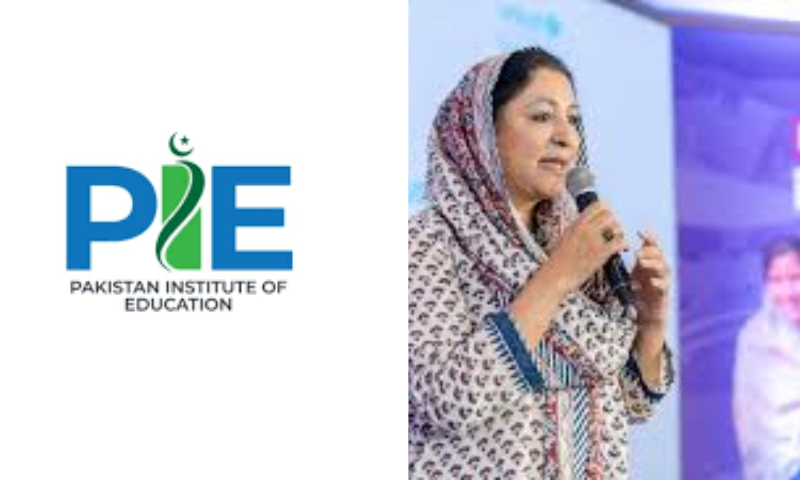
Islamabad, January 18, 2026: State Minister for Federal Education and Professional Training Wajiha Qamar on Saturday reaffirmed the government’s commitment to evidence-based and actionable policymaking, stressing the need for an integrated approach to reach children who remain neglected, marginalized and outside formal systems of social identification.
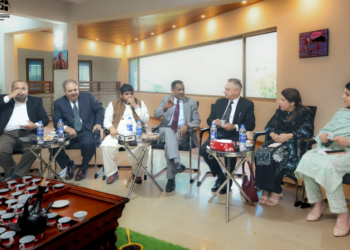
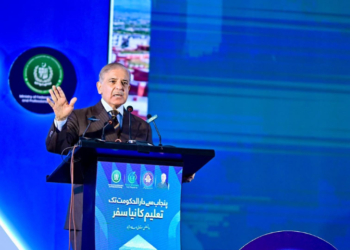
She expressed these views while addressing a policy dialogue titled “The Equity Equation: Advanced Data Systems for Education Planning,” organized by the Pakistan Institute of Education (PIE) in collaboration with Lahore University of Management Sciences (LUMS) and the Pak Alliance for Maths and Science.
The dialogue aimed to introduce advanced tools, including predictive modeling, to address the challenge of Pakistan’s estimated 25 million out-of-school children. The initiative, driven by Artificial Intelligence (AI) and Machine Learning, seeks to predict household-level education decisions shaped by economic and social barriers.
“Research has no value unless it is linked to real-world problems, and ideas remain meaningless until they are translated into implementable frameworks,” the state minister said.
Director General PIE Dr. Muhammad Shahid Soroya termed the scale of out-of-school children an “educational emergency” and underscored the need for proactive and innovative measures. He said the use of advanced technology would be critical in implementing the recently approved National Education Action Plan.
Under the new system, policymakers will be able to assess the effectiveness of different interventions—such as providing transport subsidies or building new schools—before committing financial resources, enabling more informed and efficient decision-making.
Experts from LUMS, including Dr. Farah Nadeem, Dr. Faisal Bari and Dr. Zubair Khalid, presented an interactive dashboard identifying key reasons for school dropouts, such as cost constraints, safety concerns and family-related factors. Stakeholders also reached a formal agreement to adopt these modern methodologies through pilot projects, alongside joint programs to strengthen data management capacities within government institutions.
Supported by the British Foreign, Commonwealth and Development Office (FCDO), the project is being described as a transformative shift in Pakistan’s education planning. It signals a move toward a data-driven future aimed at ensuring that every child gains access to quality education.