Tehran, June 19, 2025: Iran’s Foreign Ministry has issued a scathing rebuke of the International Atomic Energy Agency (IAEA), accusing it of complicity in what it calls Israel’s “unjust and aggressive war.” The criticism follows remarks by IAEA Director-General Rafael Grossi, who told CNN that there is no evidence of an organized Iranian nuclear weapons program.
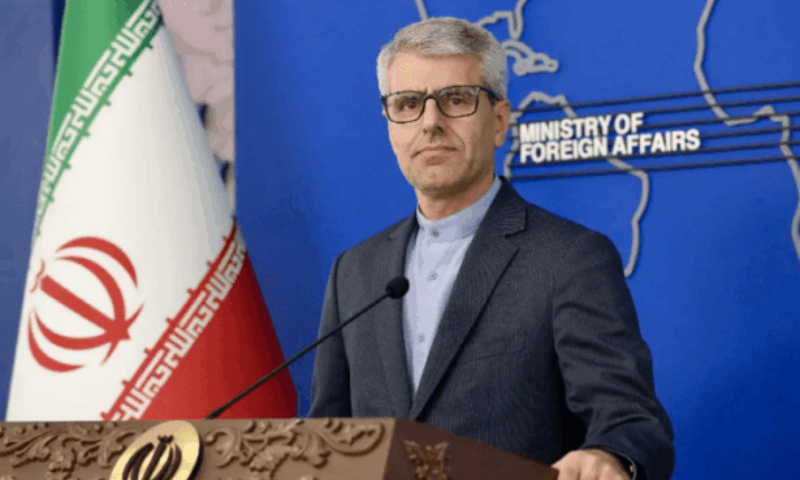
Foreign Ministry spokesman Esmaeil Baghaei, in a strongly worded post on X (formerly Twitter), accused the agency of undermining its own credibility and enabling Israeli military actions through its recent resolution. “Mr. Grossi, it is now too late—the resolution was exploited to legitimize Israel’s attack,” Baghaei wrote, asserting that the IAEA had betrayed the integrity of the global non-proliferation regime.
He condemned what he described as “misleading narratives” that, in his view, paved the way for violence. “How many innocent Iranians have been killed or injured as a result of this criminal war?” Baghaei asked, linking the IAEA’s stance to human suffering caused by the ongoing hostilities.
The IAEA’s Board of Governors adopted a resolution on June 12 declaring Iran in breach of its Nuclear Non-Proliferation Treaty (NPT) safeguards—its first such finding in nearly two decades. Nineteen member states backed the measure, prompting outrage in Tehran and the drafting of a bill in Iran’s parliament proposing withdrawal from the NPT. Baghaei confirmed the bill is under initial consideration, though no final decision has been made.
Baghaei also accused Grossi of promoting a double standard by scrutinizing Iran—a declared NPT signatory—while ignoring Israel’s undeclared nuclear arsenal. “The IAEA has become a tool for political agendas, allowing Israel, which is not even a member of the NPT, to operate without oversight,” he said, referencing Article IV of the treaty, which affirms the right to peaceful nuclear energy for all signatories.
Iran insists its nuclear program is entirely peaceful, with Supreme Leader Ayatollah Ali Khamenei reiterating a longstanding religious prohibition on nuclear weapons. Nonetheless, Iranian officials argue that the IAEA resolution and Grossi’s subsequent comments have been instrumental in justifying Israeli airstrikes on Iranian targets.
This latest diplomatic row marks a sharp deterioration in Iran–IAEA relations and raises concerns over the politicization of nuclear oversight. Experts warn that Iran’s potential withdrawal from the NPT could severely hinder international inspections and spark a new wave of regional proliferation.
As conflict continues to unfold across the region, Iran’s escalating rhetoric—and its challenge to the legitimacy of international watchdogs—adds another volatile dimension to an already precarious security environment.