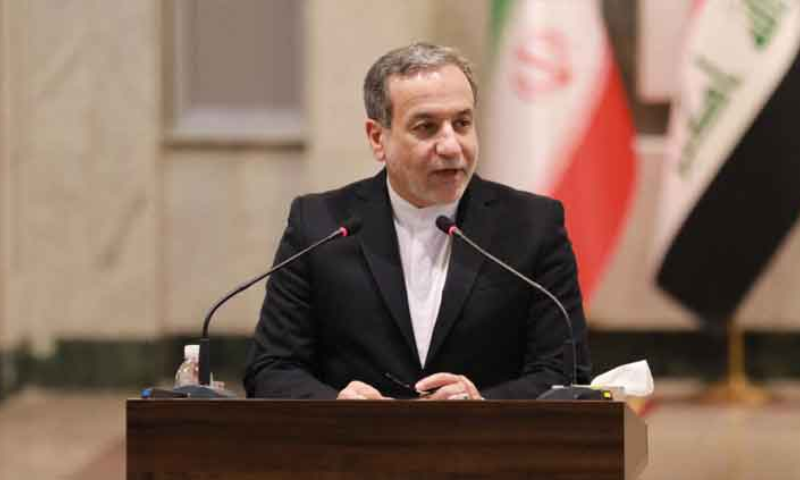
Tehran, June 19, 2025: Iranian Foreign Minister Abbas Araghchi announced Thursday that he will travel to Geneva to attend high-level talks on Iran’s nuclear program with representatives from France, Germany, Britain, and the European Union’s top diplomat. The talks are set for Friday and come amid spiraling military confrontations between Iran and Israel.
“We will meet with the European delegation in Geneva on Friday,” Araghchi confirmed in a statement carried by Iran’s state news agency IRNA.
The announcement follows a dramatic escalation in the region, as Israel launched fresh strikes on Iranian nuclear facilities, claiming to have hit a nuclear weapons development site near Natanz and the core structure of the Arak (Khondab) reactor. Iran reported air defense activation near Khondab, adding that no casualties or radiation risks were detected and that evacuations had taken place prior to the strikes.
Earlier Thursday, Iranian missiles struck multiple targets inside Israel, including what Iran called a “direct and precise” hit on a military intelligence base in Gav-Yam Technology Park, located near Soroka Hospital in southern Israel. Iranian officials said the hospital was exposed only to the blast wave, not directly targeted.
In response, Israeli Defense Minister Israel Katz declared that Supreme Leader Ayatollah Ali Khamenei would be “held accountable” for what Israel described as a missile strike on a civilian hospital. He said that Israeli forces had been ordered to intensify strikes on Iran’s strategic targets and energy infrastructure to “eliminate threats and shake the regime of the Ayatollahs.”
As the conflict deepens, Russian President Vladimir Putin and Chinese President Xi Jinping held a phone call on Thursday, in which both leaders condemned Israel’s attacks on Iran and called for immediate de-escalation. Kremlin aide Yuri Ushakov said the two presidents agreed that “there is no military solution” to the nuclear issue.
President Xi, without directly naming the United States, urged “major countries with special influence in the region” to step up diplomatic efforts to prevent further escalation, according to Xinhua News Agency.
The mounting crisis now threatens not only regional stability but also the fragile diplomatic efforts surrounding Iran’s nuclear program. The Geneva meeting will likely serve as a key test of whether diplomacy can still avert a broader war.