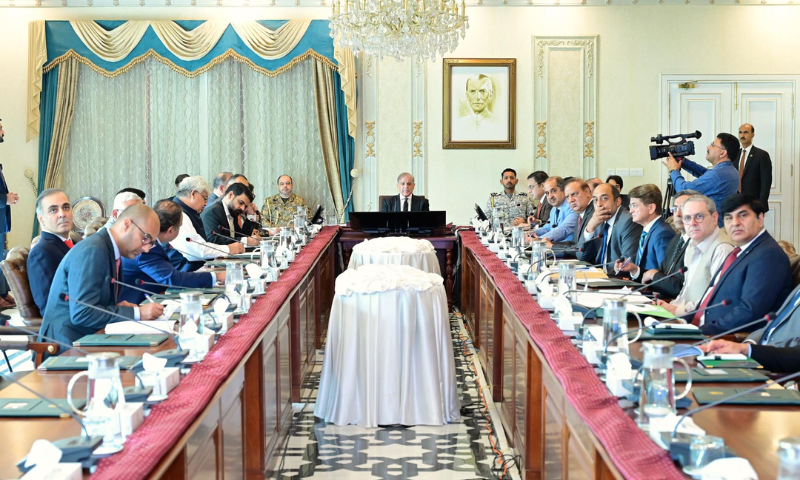
Islamabad, June 23, 2025: Prime Minister Muhammad Shehbaz Sharif on Monday directed the formation of three specialized committees to accelerate Pakistan’s transition toward a cashless economy. The committees — the Digital Payments Innovation and Adoption Committee, the Digital Public Infrastructure Committee, and the Government Payments Committee — will play a pivotal role in shaping the country’s digital financial ecosystem.
These sub-committees will be responsible for formulating recommendations to facilitate transactions between citizens and businesses, raise public awareness about digital financial systems, activate the Pakistan Digital Authority, and streamline payment flows between the government and private sector. The committees will also help draft a national digital master plan aimed at creating a robust framework for digital financial inclusion.
Chairing a high-level meeting to review progress on the national digital payments landscape, Prime Minister Shehbaz Sharif underscored the importance of making digital transactions more accessible and cost-effective than cash-based alternatives. He emphasized that establishing a modern digital payment infrastructure is key to ensuring economic transparency and aligning with global best practices.
“Developed and successful economies are prioritizing cashless systems. We must also adopt modern technologies to strengthen our digital payments infrastructure,” the prime minister said. He directed that the RAAST system — Pakistan’s digital payment platform — be fully deployed not only at the federal level but also across all provinces.
During the meeting, the prime minister was briefed on the current implementation status of the cashless initiative. Officials shared that more than 40 million users are actively benefiting from the RAAST system, and further initiatives are in place to expand this user base. All federal government financial transactions are now routed through RAAST, and provincial integration is underway.
Fintech was highlighted as a central component of the cashless economy, with participants noting that the Pakistan Digital Authority is fully operational and working to drive digital transformation. The Digital Public Infrastructure Committee will operate under the leadership of the Federal Ministry of Information Technology, while the Cashless Pakistan Steering Committee has been established at the Prime Minister’s Secretariat.
Officials also briefed the meeting on the Smart Islamabad Pilot Project, under which Islamabad is being developed as the country’s first fully cashless city. The Ministry of IT is leading this effort as a model for future expansion nationwide.
Prime Minister Shehbaz Sharif added that funds flowing through formal banking channels would boost investment in public development projects, helping improve transparency and efficiency. He also instructed that all public-private financial transactions should gradually shift to a fully digital format.
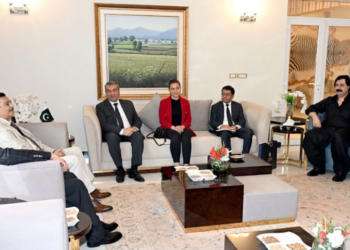
The meeting was attended by Minister for Economic Affairs Ahad Khan Cheema, Minister for Petroleum Ali Pervaiz Malik, Minister for IT Shaza Fatima Khawaja, Minister for Climate Change Dr. Musadik Malik, Governor of the State Bank of Pakistan, Chairman of the Federal Board of Revenue (FBR), and other senior officials from relevant departments and institutions.