Washington, July 5, 2025: U.S. President Donald Trump has announced that formal letters outlining new tariff levels will be sent to 12 countries starting Monday, marking a pivotal moment in the administration’s evolving trade strategy.
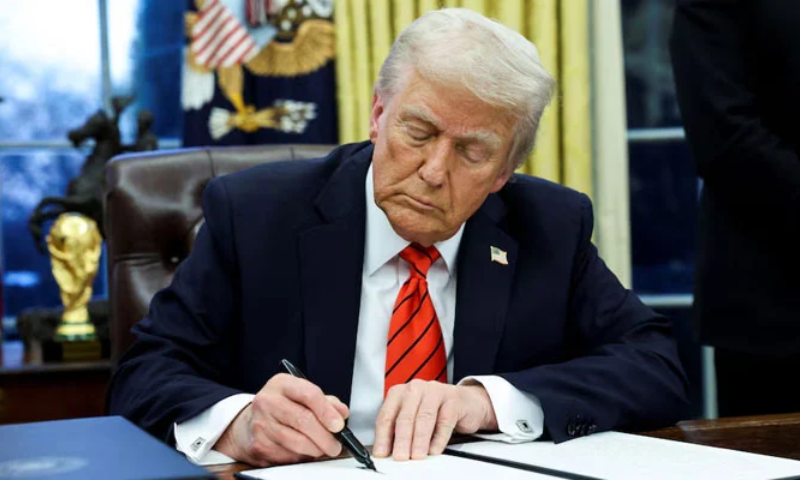
Speaking to reporters aboard Air Force One en route to New Jersey, President Trump confirmed he had signed the letters, which present “take it or leave it” offers to the targeted countries regarding the tariffs they would face on exports to the United States. He did not disclose the names of the countries involved, saying those details would be made public next week.
The move comes as a 90-day suspension of elevated tariffs — initially announced in April as part of a sweeping global tariff plan — nears its July 9 expiration. Under that plan, a 10% base tariff was set for most trading partners, with additional rates as high as 50% announced but temporarily paused to allow room for negotiations. On Friday, however, Trump suggested the final rates could go even higher — potentially up to 70% — with most tariffs set to take effect on August 1.
“I signed some letters and they’ll go out on Monday, probably twelve,” Trump said. “Different amounts of money, different amounts of tariffs.”
While the original approach focused on negotiating individualized trade deals with dozens of countries, Trump has reportedly grown frustrated with the pace and complexity of that process. “The letters are better […] much easier to send a letter,” he added, signaling a shift from protracted talks toward unilateral actions.
The change in strategy reflects mounting difficulties in securing comprehensive trade agreements — not only over tariff rates but also over broader non-tariff issues such as import restrictions and regulatory barriers. Traditionally, such trade deals take years to negotiate, and several of Trump’s proposed agreements have failed to materialize within the limited 90-day window.
So far, only two countries have successfully concluded trade agreements with the U.S. under the new framework:
- United Kingdom, which in May secured a deal to retain the 10% base tariff and obtained preferential terms for sectors like automotive and aerospace.
- Vietnam, which reached a deal to cut tariffs on many of its exports to 20% from a previously threatened 46%, while granting duty-free access to a wide range of U.S. goods.
Negotiations with India have stalled, and talks with the European Union have also failed to produce a breakthrough. EU diplomats have indicated they may now seek to extend current trade terms in hopes of avoiding punitive tariff hikes.
The latest development marks a critical juncture in U.S. trade policy, with potentially sweeping implications for global supply chains and markets already jittery from months of uncertainty.
As the deadline approaches, the global business community will be closely watching which countries receive tariff letters — and how they choose to respond.