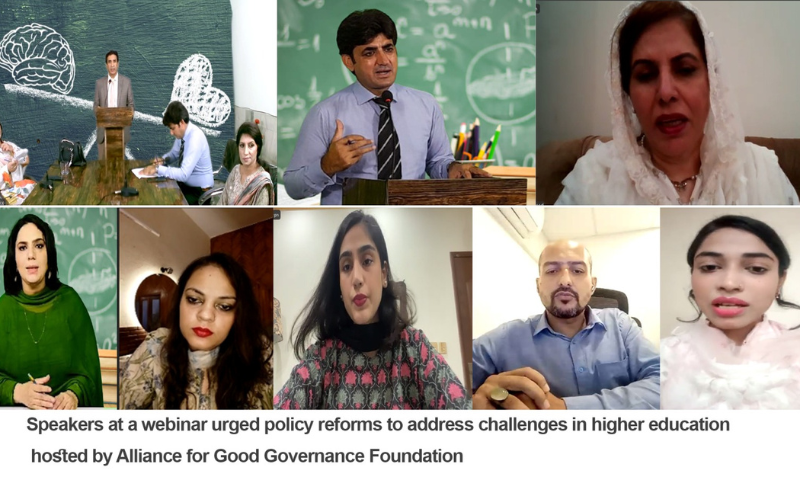
Islamabad, July 21, 2025: Pakistan’s higher education system stands at a critical juncture and faces an uncertain future unless urgent, systemic, and comprehensive policy reforms are enacted, warned leading educationists, researchers, and policy experts during a webinar hosted by the Alliance for Good Governance Foundation on Monday.
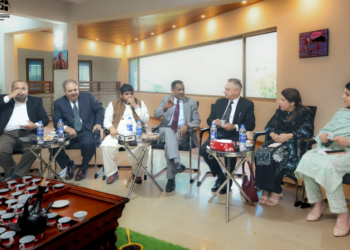
Titled “Shaping the Future: Reforming Pakistan’s Higher Education through Policy Innovation,” the virtual event brought together academics and advocates from across the country to examine the structural weaknesses in Pakistan’s education sector and propose a forward-looking policy agenda.
Speakers unanimously stressed that incremental or cosmetic changes would no longer suffice, and that Pakistan must undergo a deep-rooted transformation — from curriculum modernization and skills training to governance reform and infrastructure development — to remain relevant in the global knowledge economy.
Opening the discussion, Dr. Mubashaira, a renowned public health expert and educationist, underscored the urgency of placing education reform at the heart of national priorities. “This is not just an educational crisis — it’s a systemic failure. We continue to produce graduates who are ill-equipped for the challenges of the real world,” she said. Dr. Mubashaira advocated a shift away from outdated theoretical learning models toward practical, hands-on education, with an emphasis on innovation, employability, and digital literacy.
Kanwal Bijoro, a passionate young education advocate, highlighted the widening education divide between urban and rural areas. “We are ignoring a significant portion of our population by failing to invest in rural schools and colleges,” she warned. Bijoro called for equitable access to quality education, stressing the need for trained teachers, digital tools, and continuous professional development in marginalized communities.
On the issue of skills development, Dr. Shahida Naveed emphasized the growing importance of a skill-based education model. “Traditional academic models are no longer sustainable. The future belongs to those who can adapt, think critically, and apply practical knowledge,” she said. Dr. Shahida also urged stronger collaboration between the public and private sectors to promote vocational training and industry-linked certification programs.
Syed Yasir Ali, a curriculum specialist and policy researcher, described the current higher education curricula as outdated and disconnected from modern realities. “We are still teaching material from decades past,” he said, calling for the creation of a national task force to redesign curricula that are both globally competitive and locally relevant.
Wrapping up the session, Dr. Tariq Khan, the Alliance Convenor, echoed the panel’s concerns and called on the government to declare a national education emergency. “Pakistan is at a crossroads. Without strategic vision and political will, we risk deeper crisis,” he warned. Dr. Khan emphasized that reforms must incorporate digital transformation, environmental literacy, entrepreneurship, and inclusive education to prepare future generations for a rapidly evolving world.
The speakers also pointed to weak governance and lack of accountability in many public universities, warning that without consistent monitoring and quality assurance, any reforms would remain ineffective.
The webinar concluded with a unanimous resolution urging federal and provincial governments to take immediate and concrete steps to overhaul the education policy landscape. Key recommendations included:
- Establishing a National Skills Council
- Reforming higher education governance structures
- Increasing public investment in education to at least 4% of GDP
- Launching nationwide teacher training programs
The Alliance for Good Governance Foundation announced that all policy suggestions and research insights shared during the session will be compiled into a white paper for submission to the Ministry of Education and the Higher Education Commission (HEC).
In summary, participants delivered a unified and urgent message: Without bold, transformative action, Pakistan’s dream of cultivating a skilled, educated, and globally competitive generation will remain unfulfilled. The time to act is now.