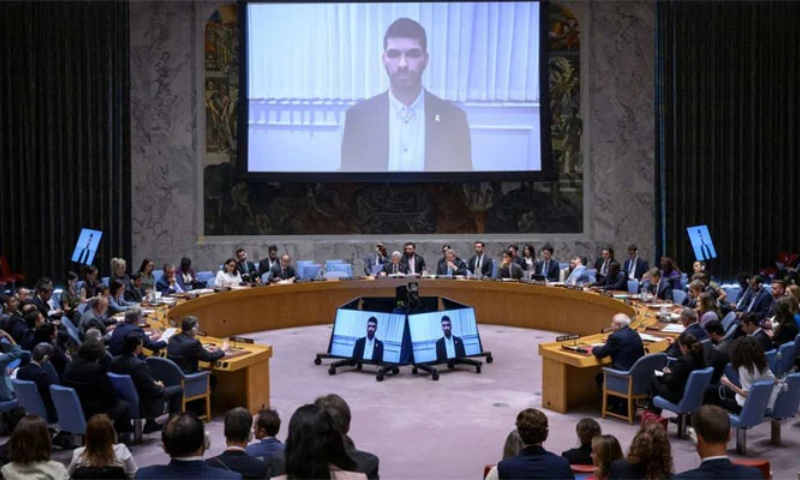
New York / Gaza / Cairo, August 10, 2025: The United Nations Security Council is currently conducting an emergency session in response to Israel’s recent announcement to seize Gaza City. The meeting was convened at the request of five European nations, Britain, France, Denmark, Slovenia, and Greece, to discuss the implications of the plan.
The proposed expansion of Israel’s military operations in Gaza has provoked widespread condemnation. UN Secretary-General António Guterres described the plan as a “dangerous escalation” that risks exacerbating the region’s humanitarian crisis. Germany has halted arms exports to Israel in response, citing serious concerns about the lack of strategic clarity.
Ahead of the Security Council session, Israeli Prime Minister Benjamin Netanyahu held a press briefing, asserting that Israel’s objective is to “free Gaza from Hamas,” not to occupy it permanently. He outlined a five-point plan intended to dismantle Hamas, restore security, release hostages, demilitarize Gaza, and establish a future civilian administration.
Netanyahu also labeled criticism of his actions as part of a “global campaign of lies”, highlighted Israel’s intentions to increase foreign media access to Gaza, and maintained that such measures are critical to ending the war swiftly.
International voices have voiced concern that the offensive may turn into a prolonged and costly military quagmire, akin to the “Vietnam” conflict. Italy’s Foreign Minister warned of potential escalation and instability, while members of Netanyahu’s security cabinet, including Finance Minister Bezalel Smotrich, called the plan insufficient.
Meanwhile, protests continue to swell both within Israel and abroad, with demonstrators demanding humanitarian access and a ceasefire. The situation in Gaza remains dire—UN agencies report that famine is intensifying, and the death toll has exceeded 61,000 Palestinians since the conflict began