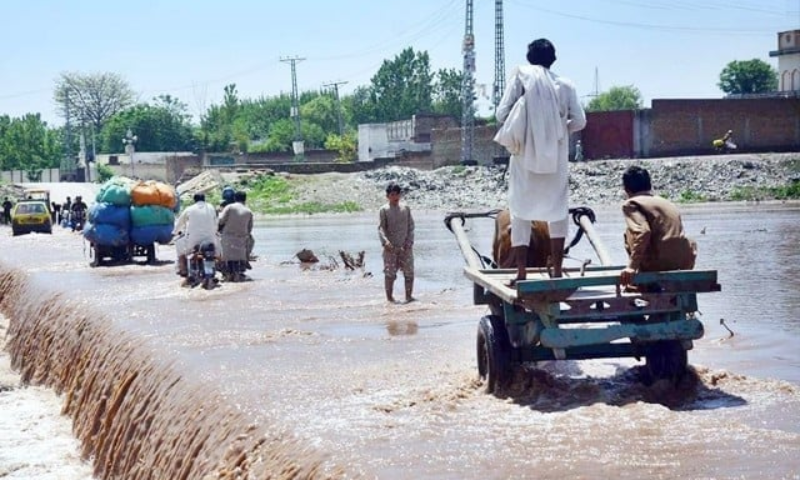
Islamabad, August 17, 2025: Pakistan’s monsoon emergency deepened over the weekend after a rare cloudburst triggered catastrophic flash floods in Khyber Pakhtunkhwa (KP), while the Pakistan Meteorological Department (PMD) warned of fresh heavy spells across Karachi and Sindh through August 23.
Death Toll and latest situation
The National Disaster Management Authority (NDMA) confirmed 645 deaths and 905 injuries nationwide from June 26 to August 16 (6:45 pm PST). In its latest Situation Report-52, the NDMA said at least 151 people had died in the past 24 hours, 144 of them in KP — including 126 in Buner district, where bodies of missing victims were recovered.
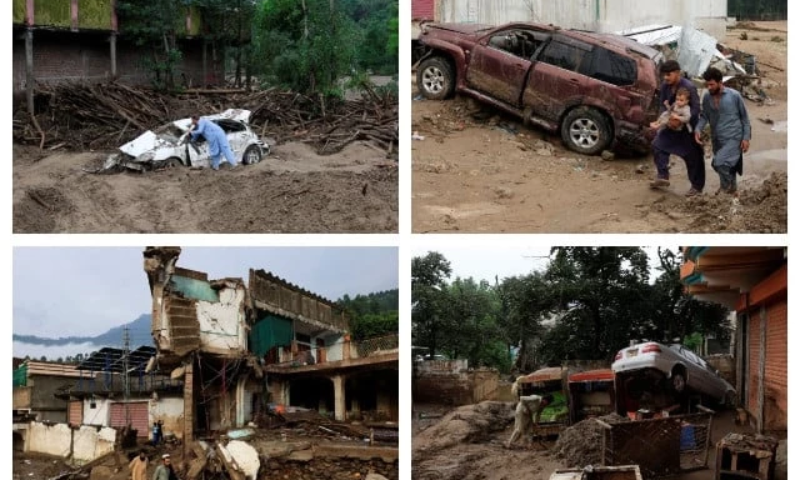
The Buner cloudburst and subsequent flash floods have caused unprecedented devastation. Provincial leaders described the rainfall intensity as extraordinary and admitted widespread destruction in northern KP.
Since June 26, authorities have conducted 396 rescue operations, evacuating nearly 18,000 people. A total of 115 relief camps have been established, primarily in Gilgit-Baltistan, where families are being provided with tents, ration packs, blankets and de-watering pumps.
The KP government has declared several districts disaster-hit, including Buner, Bajaur, Swat, Shangla, Mansehra and Battagram. Officials pledged compensation for victims, reconstruction of damaged infrastructure and relocation of communities in high-risk areas.
Rescue efforts have also faced setbacks. On Friday, a rescue helicopter crashed during stormy weather, killing five crew members, officials confirmed.
The NDMA’s cumulative damage report notes 1,913 houses affected (1,276 partially, 637 completely), 450 km of roads and 124 bridges damaged since late June. KP and Gilgit-Baltistan remain the hardest hit, with over 580 livestock losses further straining rural livelihoods.
Forecast: fresh rains and flooding risks
The PMD has forecast that strong monsoon currents from the Arabian Sea and Bay of Bengal will intensify from August 17, bringing widespread rain, thunderstorms and isolated heavy falls across Sindh (including Karachi), southeast Balochistan, south Punjab, KP, Gilgit-Baltistan and Azad Jammu & Kashmir.
Karachi is expected to receive moderate to heavy downpours between August 18–19, with the possibility of urban flooding in low-lying areas. Intermittent activity may continue until August 23, with authorities warning of power outages, waterlogging and lightning hazards.
Meanwhile, Guddu and Sukkur barrages are currently at low flood levels, but officials caution that further inflows and local heavy rainfall could quickly escalate the risk for riverine and hill torrent flooding.
Public advisories
The NDMA and PMD have urged citizens to:
- Heed evacuation orders and landslide warnings in hilly regions of KP, GB and AJK.
- Avoid unnecessary travel during thunderstorms and stay clear of overflowing bridges and culverts.
- Urban residents in Karachi, Hyderabad and Sukkur are advised to secure basements, safeguard electrical installations, avoid parking vehicles in inundation-prone streets, and report blocked storm drains to municipal hotlines.
Authorities continue to emphasize vigilance as Pakistan faces one of its deadliest monsoon seasons in recent years, with the humanitarian toll expected to rise further as new weather systems advance.