Islamabad, August 22, 2025: Pakistan and China have reaffirmed their resolve to further deepen their “All-Weather Strategic Cooperative Partnership” through enhanced bilateral, regional, and multilateral cooperation, the Foreign Office (FO) said on Friday.
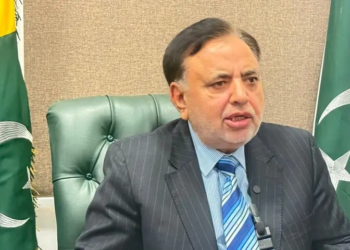
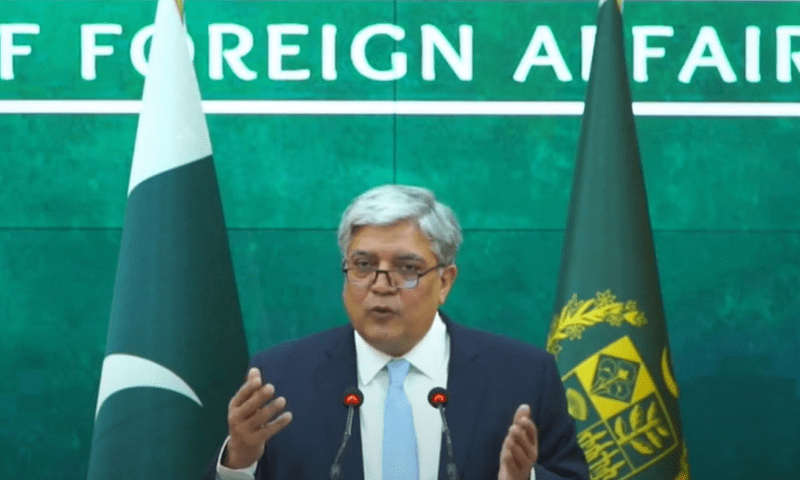
FO Spokesperson Ambassador Shafqat Ali Khan told the weekly press briefing that Chinese Foreign Minister and Politburo member Wang Yi visited Islamabad on August 21 at the invitation of Deputy Prime Minister and Foreign Minister Senator Ishaq Dar to co-chair the 6th Pakistan–China Foreign Ministers’ Strategic Dialogue.
“Both sides comprehensively reviewed the entire spectrum of relations, including CPEC Phase-II, trade, multilateral cooperation, people-to-people exchanges, and regional and global issues,” Ambassador Khan said, adding that both countries agreed to maintain close coordination on key platforms.
During the visit, Wang Yi also met President Asif Ali Zardari, Prime Minister Shehbaz Sharif, and Chief of Army Staff Field Marshal Asim Munir. President Zardari thanked China for its consistent support on sovereignty, territorial integrity, and national development, while the Prime Minister reiterated Pakistan’s commitment to expanding cooperation in trade, ICT, agriculture, industrialization, and minerals under CPEC Phase-II. In his meeting with the Army Chief, discussions focused on regional security, counterterrorism, and defense cooperation.
The FO said the visit was part of regular high-level exchanges aimed at consolidating bilateral ties.
Ambassador Khan also confirmed that the 6th Trilateral Meeting of the Foreign Ministers of Pakistan, China, and Afghanistan took place in Kabul on August 20, where the three sides committed to strengthening counterterrorism cooperation and expanding collaboration in trade, health, education, culture, and transit, with an agreement to extend CPEC to Afghanistan.
On the sidelines, FM Dar held a bilateral meeting with Afghanistan’s Acting FM Amir Khan Muttaqi, noting progress in political and economic areas but highlighting insufficient counterterrorism cooperation.
The FO spokesperson said Ishaq Dar paid an official visit to the UK from August 17–19, where he met British officials, lawmakers of Pakistani origin, Kashmiri community leaders, and Commonwealth Secretary-General Baroness Shirley Botchwey, who accepted an invitation to visit Pakistan. Dar also inaugurated digital land record services and a one-window passport system at the Pakistan High Commission in London.
Separately, Dar met Gregory LoGerfo, Acting Coordinator for Counterterrorism at the US State Department on August 12 as part of the Pakistan–US Counterterrorism Dialogue. Both sides reaffirmed their commitment to fighting terrorism, including threats from the Balochistan Liberation Army (BLA) and ISIS-K. Ambassador Khan welcomed Washington’s decision to designate the BLA and its Majid Brigade faction as Foreign Terrorist Organizations.
Pakistan and China also held the 10th Round of Bilateral Consultations on Arms Control, Non-Proliferation, and Disarmament in Beijing on August 18, discussing South Asia’s strategic stability and peaceful uses of nuclear technology and outer space. The next round will be hosted by Pakistan in 2026.
Ambassador Khan welcomed the Court of Arbitration’s August 8 ruling upholding Pakistan’s interpretation of the Indus Waters Treaty and rejecting India’s attempts to bypass treaty restrictions.
He strongly rejected Indian insinuations of “nuclear blackmail,” calling them misleading and aimed at maligning Pakistan. “Pakistan is a responsible nuclear-weapon state with a robust command-and-control system and has always exercised restraint,” he stressed.
The spokesperson criticized India’s “sabre-rattling” and warned that any aggression or violation of Pakistan’s sovereignty would be met with an “immediate and matching response,” with responsibility for escalation resting on Indian leadership.
Ambassador Khan condemned Israeli statements about creating a “Greater Israel” and displacing Palestinians, terming them a violation of international law and UN resolutions.
“Instead of provocative rhetoric,” he concluded, “India should focus on regional peace, counterterrorism, and honoring binding international treaties, including the Indus Waters Treaty.”