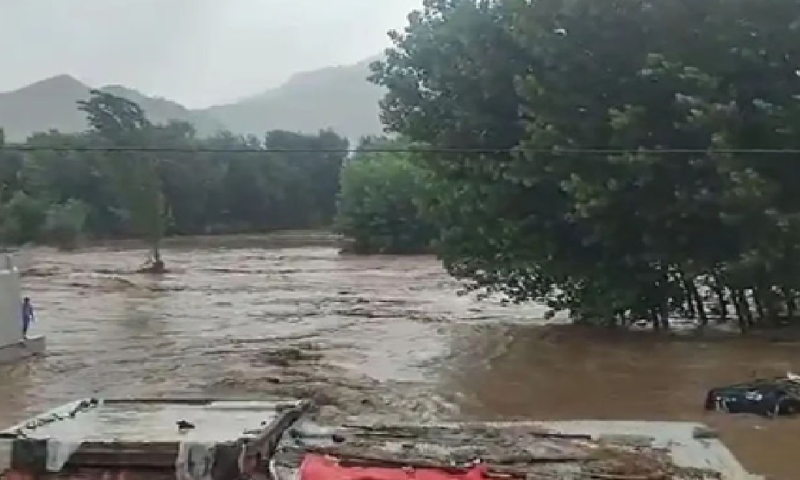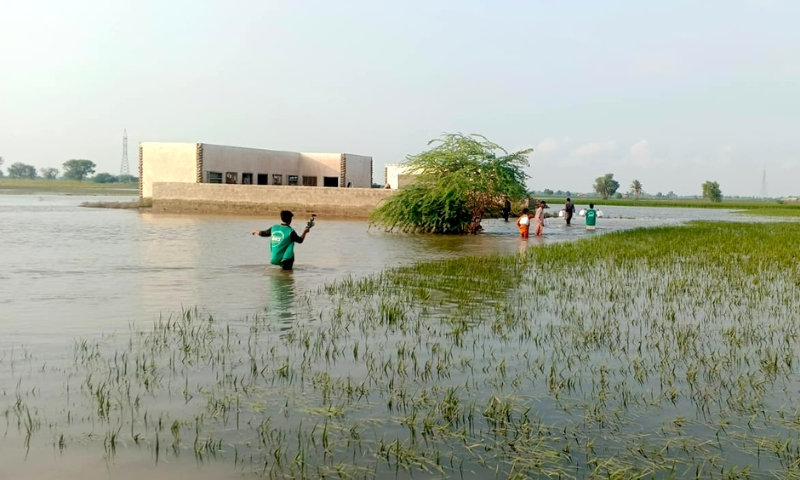
Lahore/Multan/Islamabad, September 2, 2025: The flood situation in Punjab is worsening rapidly, with authorities warning of very high floods in the Sutlej, Ravi, and Chenab rivers by September 5 amid heavy rains and additional water releases from India.
The Provincial Disaster Management Authority (PDMA) and National Disaster Management Authority (NDMA) have placed all departments on high alert as water levels surge across major headworks and barrages. Punjab Relief Commissioner Nabeel Javed said there is a strong risk of an unusual increase in river flows due to rains in the upper catchments. “On the chief minister’s instructions, all relevant departments are on alert,” he added.
PDMA Director General Irfan Ali Kathia said the next two to four hours are critical at Head Sidhnai, where water flows have reached 137,000 cusecs against an upstream surge of 150,000 cusecs from Head Balloki. He warned that the Safooran Dam at Head Sidhnai faces the risk of breaching.
“A massive flood wave from the Chenab is heading towards south Punjab. At Head Trimmu, flows have already exceeded 516,000 cusecs and continue to rise,” Kathia said. He reported water levels of 135,000 cusecs at Qadirabad, 120,000 cusecs at Khanki, and 96,000 cusecs at Marala.
In the Sutlej, flows remain at dangerous levels, with 253,000 cusecs at Ganda Singhwala and 124,000 cusecs at Sulemanki. The Ravi has also swelled, with 54,000 cusecs at Jassar and 60,000 cusecs at Shahdara.
Kathia warned that a flood wave of 600,000 cusecs is expected to reach Alipur on September 5, with waters likely to enter Sindh between September 6 and 7. Authorities are considering controlled breaches to protect vital infrastructure, including the Sher Shah Bridge.
Officials confirmed that more than 900,000 people have already been evacuated to safer locations in Punjab. NDMA has dispatched relief supplies, including eight trucks of food rations for Chiniot, Narowal, Sialkot, Hafizabad, and Wazirabad, while preparations for Jhang are underway.
Each ration pack of 46kg contains 22 essential food items. “On the prime minister’s instructions, NDMA is fully committed to rehabilitation efforts in collaboration with provincial agencies,” a spokesperson said.
In Kashmore, Sindh, water levels in the Indus are also rising sharply. At Guddu Barrage, inflows have increased to 360,777 cusecs with an outflow of 345,373 cusecs, marking a rise of over 42,000 cusecs within 24 hours.
In Khyber Pakhtunkhwa, torrential rains wreaked havoc in Jamrud (Khyber District), causing house collapses in Wazir Dhand, Malaguri, and Ghundi. One person was killed and two injured when a roof caved in. Floodwaters also washed away a poultry farm in Malaguri. In Peshawar’s Darmangi area, the Budhani Nallah discharge surged to 16,142 cusecs, putting Warsak Road, Darmangi, and Regi Larma at risk. Residents have been advised to stay away from electricity poles, submerged roads, and urban drains.
The Ministry of Water Resources has issued an emergency flood alert after India released additional water into the Sutlej River. According to officials, while India informed Pakistan through its High Commission in Islamabad, it bypassed the office of the Indus Water Commissioner, the agreed communication channel under the Indus Waters Treaty. This has raised diplomatic concerns in Islamabad over violation of treaty protocols.
Authorities in Harike and Ferozepur areas across the border have also reported extremely high water levels.
According to WAPDA’s latest update:
- Indus (Tarbela): Inflow 199,500 cusecs, level 1549.78 feet, storage 5.71 MAF.
- Jhelum (Mangla): Inflow 35,900 cusecs, level 1226.50 feet, storage 6.08 MAF.
- Chenab (Head Marala): Inflow 96,300 cusecs.
- Chashma Barrage: Inflow 237,700 cusecs, level 648.00 feet, storage 0.25 MAF.
- Kabul (Nowshera): Inflow 34,300 cusecs.
The combined storage at Tarbela, Mangla, and Chashma has reached 12.53 million acre-feet, a critical level as monsoon rains continue in northern regions.
The Ministry of Water Resources has warned that sudden inflows from India may intensify flooding in the Sutlej, threatening low-lying districts of Punjab. “There is a risk of very high floods in the Sutlej, and precautionary measures are underway at all levels,” the ministry said in a statement.