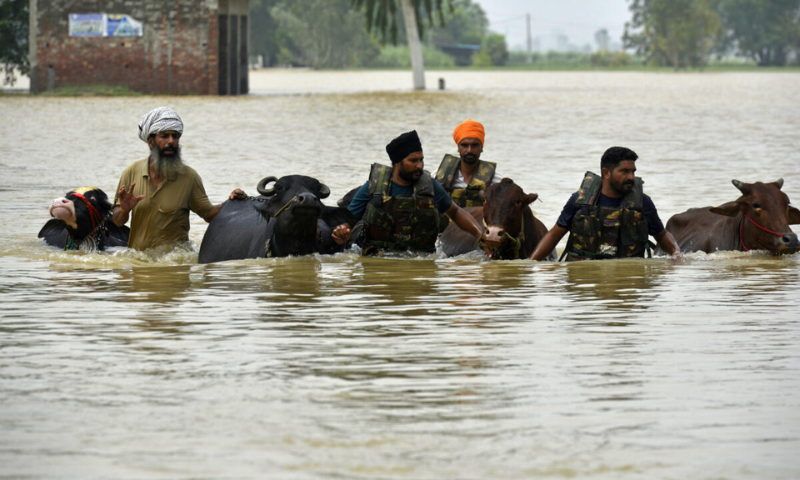
New Delhi, September 2, 2025: Catastrophic floods have marooned around 1,000 villages in India’s Punjab state, forcing thousands of residents into relief camps as authorities scramble to respond to one of the region’s worst disasters in decades.
At least 29 people were killed and more than 250,000 affected by last month’s flooding, which submerged more than 940 square kilometers (360 square miles) of farmland in the state, often described as India’s “breadbasket.” Punjab Chief Minister Bhagwant Mann called the disaster “devastating” and warned of massive crop and livestock losses in a letter to Prime Minister Narendra Modi.
Modi assured the chief minister of the federal government’s “full support” as the Indian Army and disaster management teams intensified rescue and relief operations. More than 1,000 boats and 30 helicopters have been deployed to evacuate stranded residents and deliver food supplies. “The most important thing is to save the lives of people and helpless animals trapped in the water,” Mann said in a statement.
Authorities fear the full extent of livestock losses and damage will only become clear once the waters recede. Meanwhile, floodwaters from Punjab’s rivers have crossed into Pakistan, inundating vast stretches of land there as well.
Floods and landslides are a recurring menace during the June–September monsoon season in South Asia, but experts warn that climate change and unplanned development are driving their intensity and scale. According to India’s national weather department, northwest India has received more than one-third above-average rainfall this monsoon season.
In Delhi, the Yamuna river breached its danger level on Tuesday after days of relentless rain, flooding several neighborhoods and causing hours-long traffic chaos. Last month, record-breaking rainfall also triggered deadly floods in Jammu and Kashmir, leaving dozens dead.