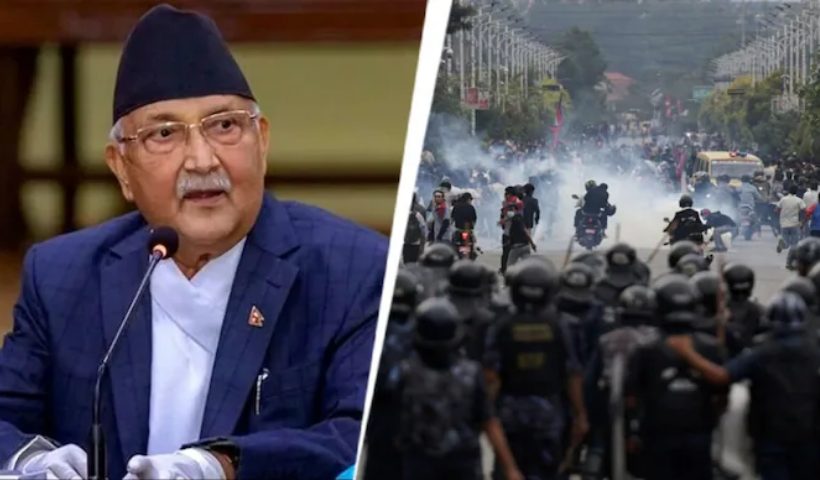
Kathmandu, September 9, 2025: Nepal was plunged into fresh political turmoil on Tuesday after Prime Minister KP Sharma Oli resigned amid massive anti-corruption protests that defied curfews, shut down the capital, and left 19 people dead in the country’s worst unrest in decades.
The crisis was triggered by the government’s social media ban last week, seen by critics as an attack on free speech. The move ignited widespread anger, particularly among young Nepalis, who flooded the streets demanding accountability, transparency, and an end to what they call the “luxurious lifestyles of corrupt politicians.”
Protests spiraled out of control on Monday as police used tear gas and rubber bullets to stop demonstrators from storming parliament. More than 100 people were injured, with reports of protesters torching vehicles, government buildings, and even the homes of several politicians. Some ministers had to be evacuated by military helicopters, according to local media.
In his resignation letter to President Ramchandra Paudel, Oli, 73, said he was stepping down “to facilitate a political solution to the crisis.” The president has begun consultations to appoint a new leader, while the army appealed for calm on social media.
The unrest forced authorities to shut Kathmandu’s main international airport as fires lit by protesters created flight risks. In the capital, thick plumes of black smoke billowed into the sky as tyres burned on roads and riot police clashed with angry crowds chanting against corruption.
“This is a movement for our future,” protester Robin Sreshtha told Reuters TV. “We want a corruption-free Nepal, where education and healthcare are accessible to all.”
The demonstrations, dubbed a “Gen Z uprising”, spread to other cities across the Himalayan nation, underscoring the depth of frustration among youth over limited economic opportunities and entrenched graft.
International concern mounted rapidly. India, home to hundreds of thousands of Nepali workers, urged restraint, while nine Western embassies in Kathmandu — including the US, UK, France, Germany, and Japan — issued a joint statement calling for protection of fundamental rights and an end to violence.
Oli, serving his fourth term and in power since July 2024, had earlier accused “selfish centres” of fueling unrest but stopped short of addressing protesters’ core demands. His resignation now leaves Nepal, already fragile since the abolition of its monarchy in 2008, facing a new phase of political instability.