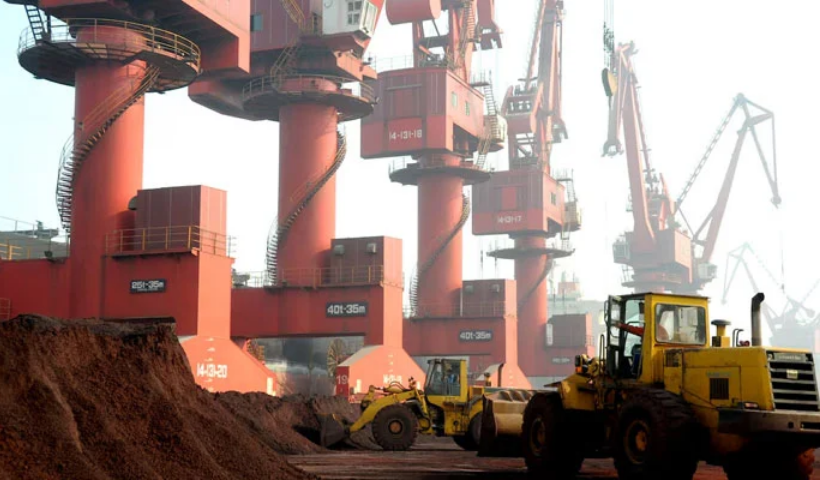
Beijing, October 9, 2025: China has intensified its grip on global rare earth supplies, announcing a fresh round of export restrictions targeting overseas defence manufacturers and semiconductor users, while adding five new rare earth elements to its control list.
The Ministry of Commerce said Thursday that the new curbs would apply to holmium, erbium, thulium, europium, and ytterbium, expanding an earlier list that already covered seven other rare earths. Dozens of refining technologies, mining tools, and processing materials have also been added to the control catalogue.
The measures come amid heightened US–China trade and technology tensions, following a call by US lawmakers earlier this week for a broader ban on chipmaking equipment exports to China. Analysts say Beijing’s move could bolster its negotiating leverage ahead of a planned Trump–Xi summit in South Korea later this month.
“This helps increase Beijing’s leverage ahead of the anticipated Trump–Xi summit,” said Tim Zhang, founder of Singapore-based Edge Research.
China, which accounts for over 90% of global processed rare earth output, has previously used export controls as a geopolitical tool. The 17 rare earth elements are crucial in producing electric vehicles, jet engines, advanced semiconductors, and military radar systems.
Under the new rules, foreign companies using Chinese rare earths or related technology will need to obtain Chinese export licenses, even if the final product is made outside China or involves no Chinese companies directly. The regulations mirror US export control mechanisms that restrict technology transfers involving American components.
The export restrictions on the five new elements and related equipment will take effect on November 8, just before the expiry of a 90-day trade truce between Beijing and Washington. Additional rules applying to foreign manufacturers who use Chinese rare earth materials or tools will come into force on December 1.
The announcement sparked a surge in Chinese rare earth stocks, with China Northern Rare Earth Group, China Rare Earth Resources and Technology, and Shenghe Resources climbing 10%, 9.97%, and 9.4%, respectively.
The Ministry of Commerce also said that export licenses will not be granted to overseas defence entities, while applications related to advanced semiconductor production will be reviewed case by case.
The restrictions target 14-nanometer or smaller chips, memory chips with 256 layers or more, and AI-related research with potential military applications. These chips power high-end smartphones, artificial intelligence systems, and advanced computing technologies.
South Korea — home to chip giants Samsung Electronics and SK Hynix — said it is assessing the new rules and will engage with Beijing to mitigate potential disruptions. Samsung declined to comment, while SK Hynix and Taiwan’s TSMC did not immediately respond.
Despite the tighter curbs, China’s commerce ministry said it intends to “facilitate licensing” and limit the scope of the restrictions to prevent global shortages.
The move underscores Beijing’s readiness to wield its dominance in the rare earth supply chain as a strategic counterweight in the ongoing US–China technology rivalry, with global industries — from defence to AI — bracing for potential supply chain disruptions.