Islamabad, October 15, 2025: Pakistan and the Afghan government have agreed to a 48-hour temporary ceasefire, following a formal request from the Taliban regime in Kabul, the Ministry of Foreign Affairs (MoFA) announced on Wednesday.
“At the request of the Afghan Taliban regime, and with mutual consent, Pakistan and the Taliban have agreed to a temporary ceasefire for 48 hours, effective from 6pm this evening,” the Foreign Office said in a statement.
According to the ministry, both sides will use this period to engage in “constructive dialogue aimed at finding a positive and sustainable resolution” to ongoing border tensions.
The announcement comes shortly after the Pakistan Army conducted precision strikes on Taliban positions inside Afghanistan’s Kandahar province, in retaliation to recent cross-border aggression.
Security sources said the operations targeted Taliban Battalion No. 4 and Border Brigade No. 6, destroying multiple strongholds and killing dozens of militants, including foreign operatives.
The sources stressed that Pakistan’s forces maintain the capability and readiness to respond to any external threat, vowing continued vigilance along the western border.
Security officials claimed the Taliban had been left in a “state of panic” following Pakistan’s retaliatory strikes.
“The defeated Taliban, after suffering heavy human and material losses, have turned to false propaganda to conceal their failures,” the sources alleged.
They further dismissed a viral social media post shared by a Taliban spokesperson claiming the capture of a Pakistani tank, clarifying that the T-55 tank shown in the footage was of Russian origin and operated by the Afghan Taliban themselves.
Officials reiterated that Pakistan’s armed forces had repelled all forms of aggression effectively and remained fully committed to the defence of the motherland.
Meanwhile, Pakistani security forces foiled an infiltration attempt in the Turkmenzai border area of Khyber Pakhtunkhwa’s Mohmand district, where militants reportedly tried to cross into Pakistan to carry out terrorist activities.
A major formation of fighters, allegedly linked to Fitna al-Khawarij, was neutralised, leaving at least 30 militants dead, the sources said.
The operation remains ongoing amid reports of continued militant movements across the border.
In a separate statement, the Inter-Services Public Relations (ISPR) confirmed that Pakistani forces had repelled an unprovoked attack by the Afghan Taliban in the Spin Boldak area of Balochistan early Wednesday.
The ISPR said the Taliban destroyed the Pak-Afghan Friendship Gate on their side — an action described as “a clear display of their mindset towards mutual trade and tribal easement rights.”
At least 15–20 Taliban fighters were killed and several others injured during the clashes, it added.
The military’s media wing said that on the night of October 14 and 15, the Afghan Taliban and Fitna al-Khawarij also attempted to assault Pakistani border posts in Kurram district, but were repelled with heavy losses.
“Eight Afghan posts, including six tanks, were destroyed in the effective yet proportionate response of Pakistani troops,” the statement said, adding that 25–30 militants were believed to have been killed.
The ceasefire follows weeks of escalating border clashes and diplomatic friction between Islamabad and Kabul, amid Pakistan’s growing concerns over terrorist groups operating from Afghan soil.
Since the Taliban’s return to power in 2021, Pakistan has reported a surge in cross-border terror attacks, particularly in Khyber Pakhtunkhwa and Balochistan provinces.
Islamabad has repeatedly urged Kabul to prevent the use of its territory by groups such as the TTP (Tehreek-e-Taliban Pakistan).
A UN Security Council monitoring report earlier this year also cited evidence of operational and financial links between the Afghan Taliban and the TTP.
Pakistan continues to host millions of Afghan refugees, some of whom have lived in the country for over four decades.
However, under the Illegal Foreigners Repatriation Plan, Islamabad has intensified the repatriation of undocumented Afghans.
According to official data, more than 554,000 Afghans have returned since April 2025 — including 145,000 in August alone.
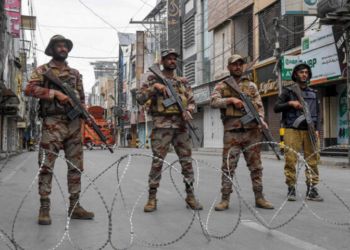
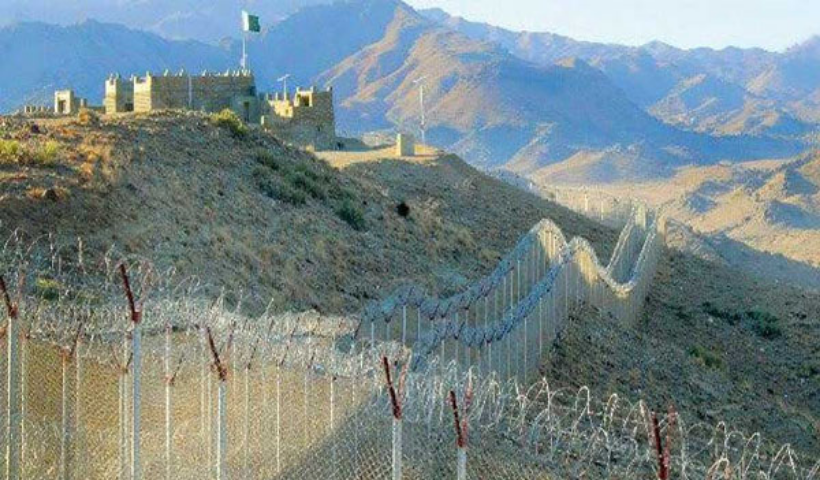
The 2,500-kilometre-long Pak-Afghan border remains one of the region’s most sensitive flashpoints, central to both security and trade ties — but also to deep-rooted mistrust between the two neighbours.