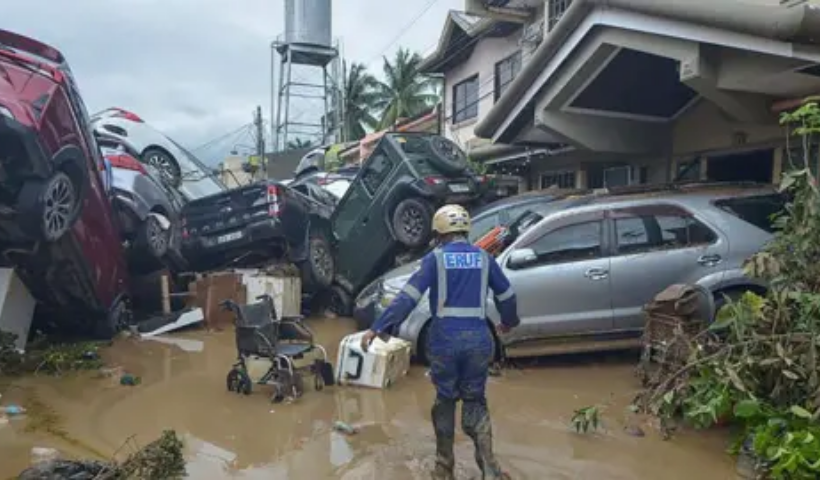
Manila, November 5: The death toll from Typhoon Kalmaegi in the Philippines has climbed past 90, with the central province of Cebu suffering its worst flooding in recent memory, authorities confirmed Wednesday.
Floodwaters swept through Cebu’s towns and cities, washing away vehicles, riverside homes, and even large shipping containers. Cebu provincial spokesperson Rhon Ramos reported that 35 bodies were recovered in Liloan, part of the metro Cebu area, bringing the provincial death toll to 76. Nationally, 17 additional fatalities were confirmed in other provinces, while 26 people remain missing, according to Rafaelito Alejandro, deputy administrator of the national civil defence agency.
“It was the major cities that got hit, highly urbanised areas,” Alejandro said, describing the scale of the flooding.
Local residents in Cebu City described scenes of devastation. “The flood here yesterday was really severe,” said shopkeeper Reynaldo Vergara, 53, who lost everything when the nearby river overflowed.
Meteorologists reported that 183 millimetres (seven inches) of rain fell over Cebu City within 24 hours—well above its monthly average of 131mm. Provincial governor Pamela Baricuatro called the flooding “unprecedented”, saying, “We were expecting winds to be the dangerous part, but the water is what’s truly putting our people at risk.”
Scientists have repeatedly warned that climate change is intensifying tropical storms. Warmer seas fuel stronger typhoons, while a warmer atmosphere carries more moisture, producing heavier rainfall.
Nearly 400,000 people were evacuated ahead of Kalmaegi’s landfall.
Relief efforts suffered a setback when a Philippine Air Force Super Huey helicopter crashed in northern Mindanao while delivering aid. Six personnel—two pilots and four crew members—were confirmed dead, according to Colonel Maria Christina Basco, air force spokesperson.
As of Wednesday morning, Typhoon Kalmaegi was tracking west toward Palawan, packing sustained winds of 130 km/h (81 mph) and gusts of up to 180 km/h.
The Philippines, struck by around 20 tropical storms annually, has already hit that average this year. Meteorologists expect “three to five more” storms before year’s end.
Kalmaegi follows Super Typhoon Ragasa, which struck the region in September, leaving at least 14 people dead in Taiwan and widespread destruction across the northern Philippines.