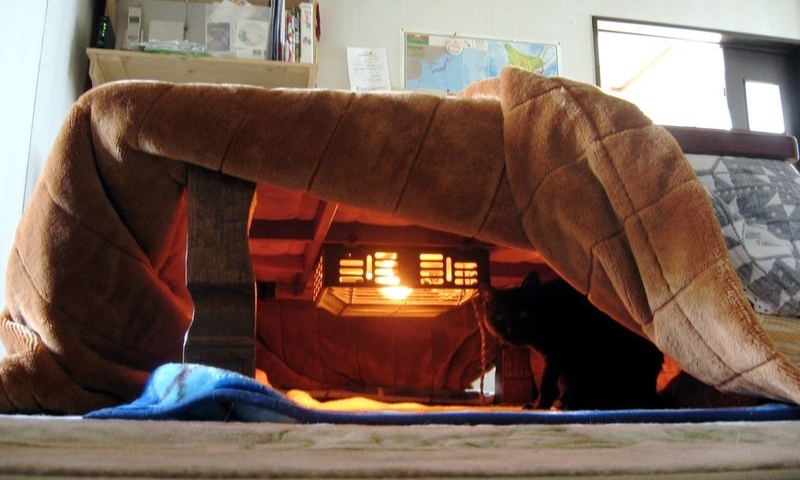
Tokyo, January 22, 2026: In many Japanese homes, central heating is uncommon, and households instead rely on the kotatsu during the colder months—a low table with a heater underneath, draped with thick blankets to trap warmth. The kotatsu provides a cozy space for sitting, eating, reading, or relaxing, making it a centerpiece of winter life.
The kotatsu has a long history, dating back to the Muromachi era (14th–16th century), when it was placed over a hearth fire. Over time, it evolved from charcoal-based heating to the first electric kotatsu in the 1950s, which quickly became popular across Japan.
Modern kotatsu designs have adapted to contemporary lifestyles, featuring furniture-style models that double as regular tables during warmer seasons. They remain an energy-efficient and practical source of warmth during winter.
Beyond functionality, the kotatsu is a cultural symbol of togetherness. Families and friends gather around it to share meals, study, converse, and relax, reinforcing communal bonds. The kotatsu continues to represent comfort, family, and shared experiences, reflecting the enduring warmth of Japanese winter traditions.