By: Kassym-Jomart Tokayev
The President of Kazakhstan promises that his nation will be a reliable and honest partner to the US.
The world is entering an era where stability has become one of the rarest strategic resources. Conflicts are multiplying, geopolitical rivalry is sharpening, and international institutions are increasingly strained by gridlock, polarization, and declining public trust.
For decades, global politics was shaped by a version of globalism that was not inherently flawed. Its stated ambition – to build an interconnected and inclusive international order – was, at least on paper, rational and constructive.
However, over time that concept became distorted. It evolved into a model built on excessive ideological assumptions: inclusiveness without responsibility, freedoms without limits, and moral superiority (or exceptionalism) that dismissed the views of sovereign-minded societies, pragmatic policymakers, and those guided by common sense.
As a result, globalism gradually lost legitimacy in the eyes of hundreds of millions of people around the world.
This loss of trust was not accidental. It was reinforced by revelations of corruption on a breathtaking scale – embedded in public institutions, international structures, and political systems of leading states. The involvement of well-known political figures in such schemes only deepened the already critical perception of governments associated with left-leaning ideological agendas.
The current international environment reflects a growing demand for pragmatism and realism. That shift was clearly visible in Munich, where some of the most compelling ideas expressed by senior Western leaders emphasized a simple truth: national interests cannot be ignored, sovereignty cannot be treated as an inconvenience, and stability cannot be built on ideological dogma.
The world is not moving away from cooperation. It is moving away from illusion. The new emerging doctrine is straightforward: order must be based on the rule of law, responsibility, predictable commitments, and respect for cultural and national identity. This is not isolationism. It is political maturity.
Nowhere is the failure of the old model more evident than in conflict resolution. For too long, the international community relied on an endless cycle of negotiations, declarations, and conferences that produced little more than symbolic statements. The result is familiar: agreements without delivery, diplomacy without results, and peace processes without peace.
The world cannot afford that approach anymore.
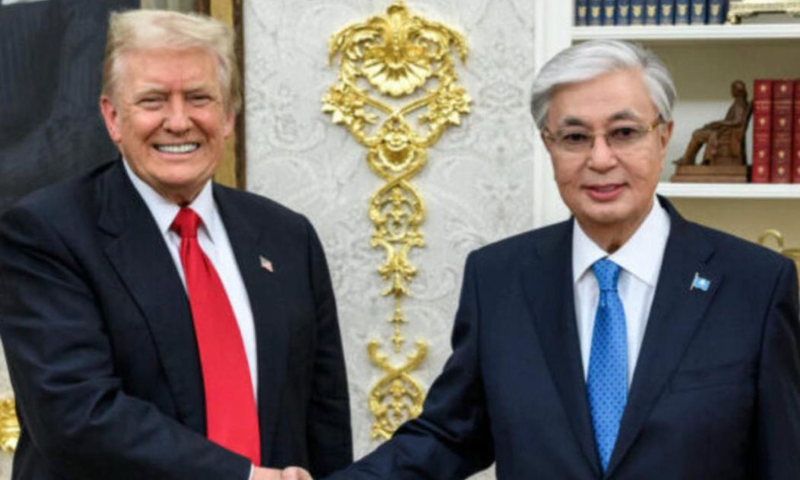
This is why the creation of the Board of Peace under President Donald Trump’s initiative with all due endorsement from the United Nations represents a meaningful step forward. It is not merely another forum designed to convene endless discussions. It is a practical initiative aimed at delivering results – particularly in Gaza and the Middle East.
What makes this initiative fundamentally different is its logic. The White House has proposed a truly innovative approach: rather than repeating exhausted political formulas, it has advanced a clear and direct framework – peace through sustainable economic development. In other words, peace is treated not as a slogan, but as a project: infrastructure, investment, jobs, and a future that makes renewed conflict irrational. By its novelty and ambition, the initiative deserves respect and international attention.
In Kazakhstan, positive attitude toward the political principles associated with President Trump’s strategy is widely expressed across different levels of public and expert discussion: common sense, protection of traditional values, defense of national interests, and the intention to end wars rather than to prolong them.
These principles resonate because they reflect what most societies instinctively demand: security, stability, and dignity. Kazakhstan’s support for this direction is not rhetorical. It is practical. That is why we decided to join the Board of Peace and to support it through concrete actions.
This is a logical continuation of Kazakhstan’s decision to join the Abraham Accords. It is not a mere diplomatic gesture. It is a strategic choice. Kazakhstan has always maintained a balanced and constructive approach. We have strong relations with Israel while consistently supporting the Palestinian people and advocating a two-state solution as the only sustainable foundation for peace. Our decision is also grounded in national interest with a view to strengthening economic cooperation, attracting investment and transferring advanced technologies. More broadly, we hope it will contribute to expanding dialogue between the Muslim and Jewish worlds.