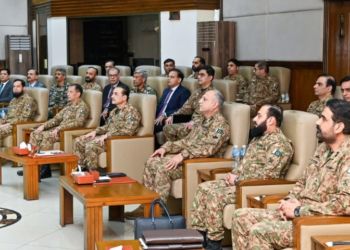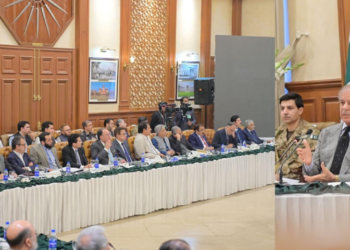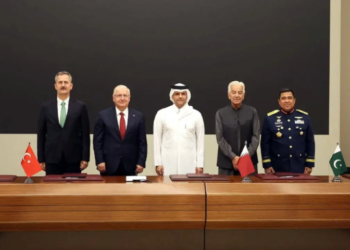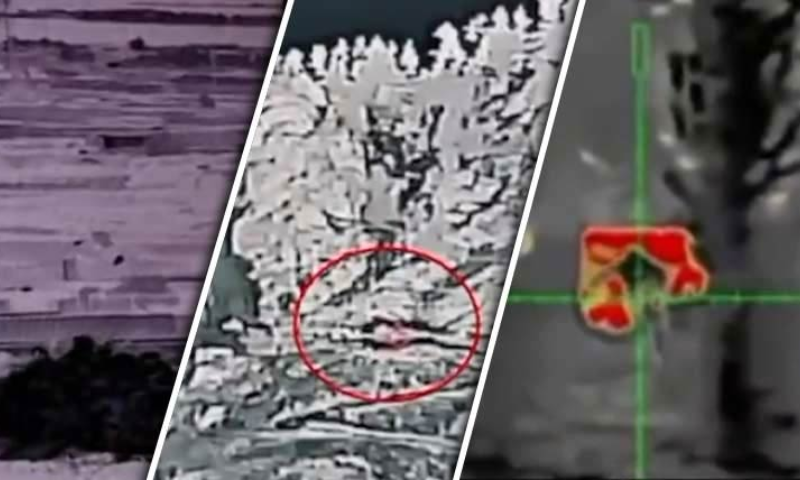
Islamabad, February 27, 2026: Tensions flared sharply along the Pakistan–Afghanistan border after what Pakistani officials described as unprovoked firing by the Afghan Taliban, prompting Islamabad to launch a large-scale counter-offensive, including air operations by the Pakistan Air Force (PAF).
The operation, named Operation Ghazab lil-Haq, was initiated following cross-border attacks on Pakistani check posts in multiple districts of Khyber Pakhtunkhwa, including Chitral, Khyber, Mohmand, Kurram, and Bajaur. According to security sources, clashes intensified overnight as Pakistani forces targeted militant infrastructure across the border.
Airstrikes, heavy losses claimed
Security officials said PAF jets struck a large ammunition depot in Afghanistan’s Nangarhar Province, triggering massive explosions and crippling militant supply lines. Authorities later reported that key installations in Kabul, Paktia Province, and Kandahar were also targeted as the response expanded.
Officials initially cited 72 militants killed, but subsequent assessments raised the toll to at least 133 Taliban fighters, with more than 200 others wounded. Pakistani authorities claimed that 27 Taliban posts were destroyed and nine seized during ground engagements. Two corps headquarters and three brigade headquarters were reportedly hit, while two ammunition depots and a logistics base were destroyed. More than 80 tanks, artillery guns, and armored personnel carriers were said to have been damaged or eliminated.
Several Afghan border posts, including positions in Angoor Adda and Paktika Province, were reportedly demolished. Security officials stated that some forward posts were abandoned by Taliban fighters amid sustained air and drone strikes.
Pakistani forces also intercepted and shot down quadcopters allegedly used by militants to target security positions. Drone operations were conducted against hostile positions near sensitive crossing points, including Kharlachi in Kurram district.
Government confirms ongoing operations
Prime Minister’s spokesperson for foreign media, Mosharraf Zaidi, confirmed that counter-strikes were ongoing, stating that dozens of militant posts had been destroyed and several captured. He rejected reports circulating online about Pakistani casualties as “fabricated propaganda,” asserting that no Pakistani post had been overrun and no soldiers captured.
However, Federal Information Minister Attaullah Tarar confirmed that two Pakistani soldiers were martyred and three others injured during exchanges of fire. He accused the Afghan Taliban of initiating hostilities and then spreading “false and baseless propaganda” to conceal battlefield setbacks.
Minister of State for Interior Talal Chaudhry reiterated that Pakistan would not compromise on its territorial integrity, warning that cross-border aggression would be met with swift and decisive action.
Minister of State Bilal Azhar Kayani said Pakistan had previously shared intelligence regarding militant hideouts with Afghan authorities but no action was taken. He stressed that while Pakistan seeks peace, it will not allow its security to be undermined.
Political leadership backs Armed Forces
President Asif Ali Zardari, in a post on X, declared that Pakistan would not compromise on peace or territorial integrity. “Those who mistake our peace for weakness will face a strong response,” he stated, reaffirming the government’s resolve to confront aggression.
Prime Minister Shehbaz Sharif praised the armed forces’ readiness and professionalism, asserting that the country’s defense would not be compromised. He reiterated that while Pakistan promotes regional peace, it would firmly defend its sovereignty and security.
Meanwhile, Khalid Maqbool Siddiqui, leader of MQM-P, condemned the Taliban’s actions and expressed solidarity with the armed forces, stating that Pakistan’s sovereignty would be defended at all costs.
State media reported that several Afghan families awaiting repatriation were temporarily shifted to a holding center in Landi Kotal near the Torkham border amid rising tensions.
The escalation follows recent intelligence-based airstrikes targeting camps linked to the banned Tehreek-e-Taliban Pakistan (TTP), referred to officially as “Fitna al-Khawarij.” Those strikes reportedly targeted hideouts in Nangarhar, Paktika, and Khost provinces after deadly attacks inside Pakistan.
Authorities said the operation remains ongoing, with Pakistani forces continuing efforts to secure the border and eliminate militant threats. Officials emphasized that Pakistan’s peace would not be mistaken for weakness and that any aggression would be met with a firm and comprehensive response.