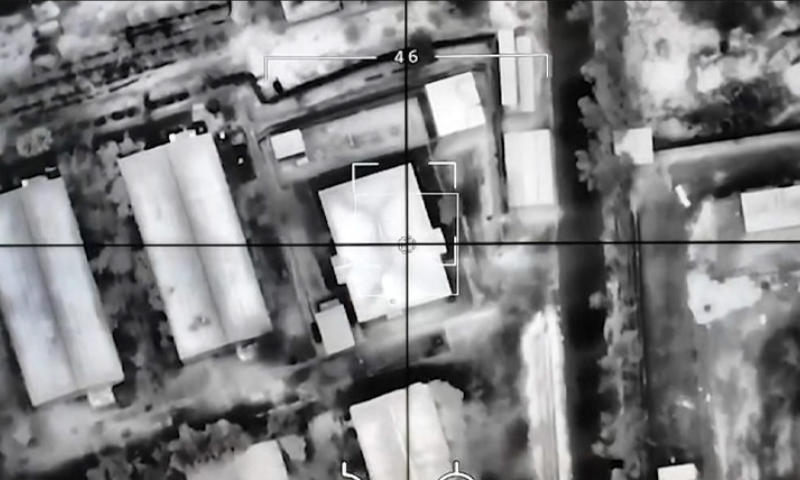
Islamabad, March 13,2026: Federal Information Minister Attaullah Tarar said on Friday that Pakistan carried out successful overnight strikes on terrorist-affiliated locations in Afghanistan, targeting camps and logistical infrastructure used to support attacks against Pakistan.
In a post on the social media platform X, the minister said the strikes took place on the night of March 12–13, 2026, and were aimed at installations linked to militant activities.
“Pakistan precisely targeted only those installations which directly or indirectly support terrorism from inside Afghanistan and terrorist camps,” Tarar said, adding that no civilian population or civilian infrastructure was targeted, rejecting claims made by Afghan authorities and some media outlets.
Security sources earlier confirmed that the strikes were conducted as part of Operation Ghazab Lil Haq, an ongoing campaign launched by Pakistan in late February following cross-border firing incidents.
According to the sources, the armed forces destroyed several militant training camps and support facilities across Afghanistan. Among the targets was the headquarters of the Afghan Taliban’s 313 Corps in Kabul, along with associated infrastructure and an ammunition depot.
In Kandahar, Pakistani forces struck the Tarawo terrorist training camp and an oil storage facility, while another operation targeted the Sher-e-Nau militant camp in Paktia Province.
Security officials also said that Pakistani forces shot down three drones belonging to “Fitna al-Khawarij,” a term the state uses for militants affiliated with the banned Tehreek-i-Taliban Pakistan (TTP), using electronic warfare systems.
Tarar further claimed that during Operation Ghazab Lil Haq, 663 Afghan Taliban operatives had been killed and more than 887 injured, while 249 check posts were destroyed and 44 captured. He added that 224 tanks, armoured vehicles, and artillery guns had been destroyed, and 70 militant camps and support facilities had been effectively targeted by airstrikes across Afghanistan.
Rising tensions
Relations between Pakistan and Afghanistan have remained strained since the Taliban returned to power in Kabul in 2021. Islamabad has repeatedly urged the Afghan administration to dismantle militant sanctuaries on Afghan soil, particularly those linked to the TTP.
Tensions escalated further after a February 16 vehicle-borne suicide attack on a joint security forces post in Bajaur District near the Afghan border. Militants rammed an explosives-laden vehicle into the perimeter wall of the Malangi check post, killing 11 Pakistani soldiers. A young girl also died, while seven civilians, including women and children, were injured when a nearby building was damaged in the blast.
Investigators said the suicide bomber, identified as Amad alias Qari Abdullah or Abu Zar, was linked to Afghan Taliban special forces from Balkh Province, while the TTP claimed responsibility for the attack.
On February 21, a lieutenant colonel and a sepoy were also martyred in a suicide attack during an intelligence-based operation in Bannu District in Khyber Pakhtunkhwa.
The military’s media wing, Inter-Services Public Relations (ISPR), has previously stated that militants were using Afghan territory to launch attacks inside Pakistan, warning that operations would continue against the perpetrators “irrespective of their location.”
Earlier, Defence Minister Khawaja Asif had also warned that Pakistan could conduct strikes inside Afghanistan if cross-border attacks continued.
The latest developments underscore growing security tensions along the Pak-Afghan border, with both sides exchanging accusations over militant activity and cross-border violence.