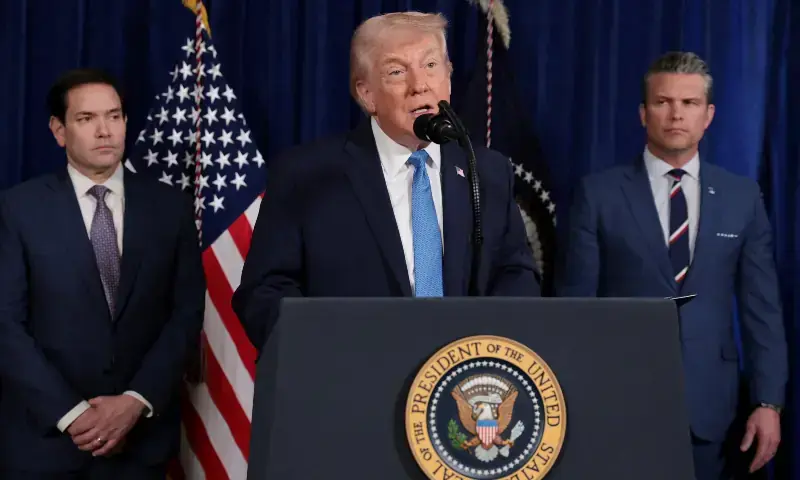
Washington/Tehran, March 23, 2026: US President Donald Trump on Monday announced a five-day postponement of planned military strikes on Iranian power plants, hours before a self-imposed deadline that had raised fears of further escalation in the ongoing conflict in the Middle East.
In a post on his Truth Social platform, Trump claimed that Washington and Iran had engaged in “very good and productive” discussions over the past two days aimed at achieving a “complete and total resolution of hostilities.” However, the White House did not provide details regarding the nature, location, or participants of the reported talks.
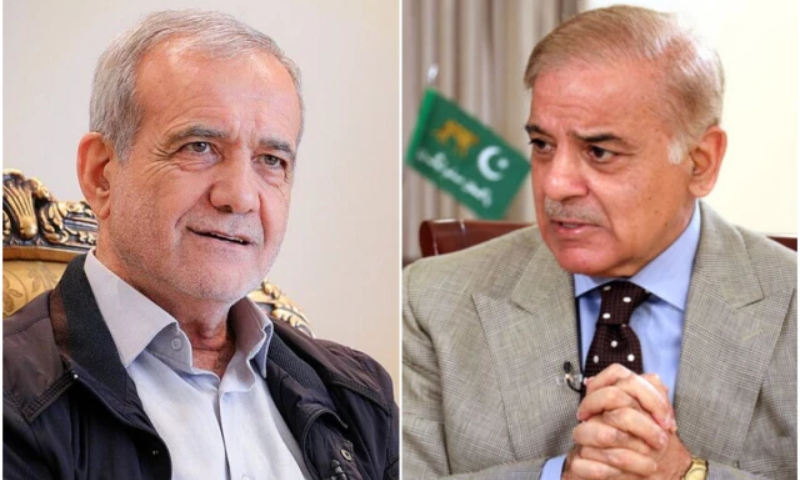
Iranian authorities swiftly rejected the claim. State-linked media outlets, including Mehr News Agency, cited the foreign ministry as saying there were no negotiations between Tehran and Washington, dismissing Trump’s remarks as an attempt to influence global energy markets.
Markets react to Trump’s announcement
Trump’s statement had an immediate impact on global markets. Brent crude prices fell sharply—dropping nearly 13 percent to below $100 per barrel—before stabilizing around $101.80. Meanwhile, US stock futures rebounded, reversing earlier losses to post gains of approximately 1.3 percent.
Speaking to Fox Business Network, Trump said Iran was eager to strike a deal and suggested an agreement could be reached within days.
Israel likely to follow US pause
A source familiar with Israeli war planning indicated that Israel had been kept informed of US contacts with Tehran and was likely to mirror Washington’s decision by suspending strikes on Iranian energy infrastructure. The Israeli Prime Minister’s Office did not immediately comment.
Earlier, Trump had warned that Iranian power plants would be destroyed unless Tehran ensured unrestricted access to the Strait of Hormuz within 48 hours.
Iran threatens retaliation
In response, Iran’s Islamic Revolutionary Guard Corps warned of retaliatory attacks on Israeli infrastructure and facilities supplying US bases across the Gulf. The situation further escalated as Iran’s Defence Council threatened to mine key maritime routes, effectively disrupting shipping across the Gulf region.
Energy experts have warned that such actions could trigger a severe global energy crisis. Fatih Birol described the current situation as potentially more severe than the oil shocks of the 1970s and the energy disruptions following the 2022 Russia-Ukraine conflict.
Rising human and regional impact
The conflict, now in its fourth week, has reportedly claimed over 2,000 lives since it began on February 28, significantly destabilizing regional and global markets.
Recent Israeli strikes targeted infrastructure in Tehran and other cities. Iranian media reported casualties in residential areas of Khorramabad, while an attack in Bushehr reportedly killed a senior meteorological official.
Meanwhile, across the Gulf, Saudi authorities confirmed that two ballistic missiles were launched toward Riyadh, with one intercepted and the other landing in an uninhabited area.
Risk to Gulf infrastructure and water supply
Analysts warn that attacks on power infrastructure could have catastrophic consequences for Gulf countries, where electricity is critical for desalination plants that supply drinking water. Nations such as Bahrain and Qatar rely almost entirely on desalinated water, while the United Arab Emirates and Saudi Arabia depend heavily on such systems.
Any prolonged disruption could severely impact water security and living conditions across the region, heightening concerns over the broader humanitarian and economic fallout.