By Shah Khalid Khan
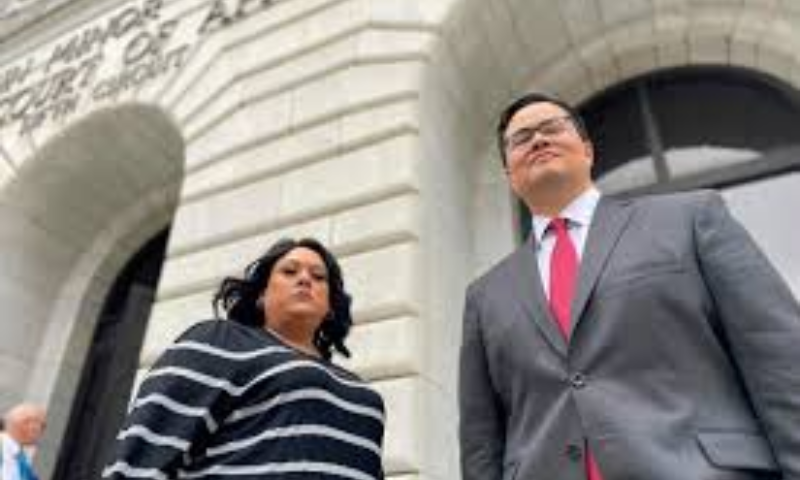
Washington, D.C. / Laredo, Texas, March 24, 2026: The U.S. Supreme Court on March 23, 2026, denied certiorari in Villarreal v. Alaniz, refusing to review a lower court ruling that shields Laredo, Texas, police officers and prosecutors from a civil rights lawsuit brought by citizen journalist Priscilla Villarreal. The decision effectively ends Villarreal’s long-running First Amendment claim stemming from her 2017 arrest for seeking and publishing nonpublic information from a police source.
Villarreal, widely known online as “La Gordiloca,” operates a popular Facebook page providing local news and commentary to thousands of followers in the Laredo border community. In 2017, she twice texted a Laredo police officer to confirm details she had already heard about two incidents: the suicide of a U.S. Border Patrol agent and a fatal car crash involving a family. The officer voluntarily provided the information, which Villarreal then reported on her page.
Six months later, she was arrested and charged under Texas Penal Code §39.06(c), a felony statute prohibiting the solicitation of nonpublic information from a public servant with the intent to obtain a “benefit.” Prosecutors argued that the “benefit” was increased social media engagement and followers. Villarreal contended the arrest was retaliatory, motivated by her critical reporting on local law enforcement and officials.
After charges were eventually dropped, Villarreal filed a federal civil rights lawsuit alleging violations of her First Amendment rights. Lower courts granted qualified immunity to the defendants, ruling that no reasonable officer would have known that enforcing the statute in this context was unconstitutional. The 5th U.S. Circuit Court of Appeals, sitting en banc, upheld this finding in a divided decision, even after the Supreme Court had previously vacated and remanded the case in light of its 2024 ruling in Gonzalez v. Trevino, which addressed standards for retaliatory arrest claims.
In declining to hear the case, the Supreme Court issued no explanation—a common practice in certiorari denials. However, Justice Sonia Sotomayor issued a pointed solo dissent, calling the Court’s refusal “a grave error” and arguing that the arrest represented a “blatant” First Amendment violation.
“It should be obvious that this arrest violated the First Amendment,” Sotomayor wrote. “No reasonable officer would have thought that he could have arrested Villarreal, consistent with the Constitution, for asking the questions she asked.” She warned that the 5th Circuit’s approach could allow officials to criminalize routine journalistic practices—such as questioning sources—whenever an unchallenged statute is cited, undermining core press freedoms and leaving journalists vulnerable nationwide.
The case had garnered widespread support from major media organizations, including The New York Times, The Washington Post, ABC News, and free speech groups like the Foundation for Individual Rights and Expression (FIRE), who filed amicus briefs arguing that the ruling threatened basic reporting activities.
Villarreal’s civil claim now cannot proceed, and the officials involved remain protected by qualified immunity. Legal observers note that the outcome reinforces criticism of the doctrine, which often shields government actors from accountability even in cases involving alleged constitutional violations.
Villarreal has expressed disappointment but vowed to continue her community journalism. The decision leaves unresolved broader questions about the intersection of state secrecy laws, qualified immunity, and First Amendment protections for citizen journalists in an era of social media reporting.
This ruling highlights ongoing tensions between law enforcement discretion, press freedom, and the role of online platforms in local news dissemination.