Tehran/Tel Aviv/Dubai, March 31, 2026: Several European countries have reportedly curtailed support for United States military operations linked to the ongoing conflict with Iran, as tensions continue to escalate across the region.
According to Italian media reports, Italy denied US military aircraft permission to land at its Sigonella air base in Sicily after flight plans were submitted without prior authorization from Italian authorities. The development follows a similar move by Spain, which earlier this week barred US aircraft involved in the conflict from using its airspace and military bases.
Spain’s Defence Minister, Margarita Robles, confirmed that Madrid had clearly communicated its refusal to support operations related to the war in Iran, underscoring growing European unease over the widening conflict.
In a major escalation, Iran targeted a crude oil tanker off the coast of Dubai, setting it ablaze in what officials described as a drone attack. The Kuwait-flagged vessel, carrying nearly two million barrels of oil, sustained hull damage but reported no casualties.
The strike is part of a series of attacks on commercial shipping in the Strait of Hormuz and surrounding Gulf waters since the outbreak of hostilities following US and Israeli strikes on Iran in late February.
Authorities later confirmed that the fire aboard the tanker had been brought under control, though concerns remain over potential environmental damage and disruptions to global energy supply.
Global oil markets reacted sharply, with prices briefly spiking amid fears of supply disruptions. In the United States, gasoline prices crossed $4 per gallon for the first time in over three years, intensifying domestic political pressure on President Donald Trump and his Republican Party ahead of upcoming elections.
The conflict has already begun to strain global energy flows, raising concerns about inflation and economic instability worldwide.
Despite the intensifying conflict, Washington is reportedly exploring a diplomatic resolution. According to US officials, President Trump is seeking to end the war without forcing Iran to reopen the Strait of Hormuz immediately, aiming instead to meet key military objectives before transitioning to negotiations.
White House Press Secretary Karoline Leavitt said the administration is working toward a potential agreement with Tehran ahead of an April 6 deadline. However, she noted discrepancies between Iran’s public statements and its private communications with US officials.
US Secretary of State Marco Rubio reiterated that while diplomacy remains the preferred path, Iran would face “serious consequences” if tensions continue, particularly regarding restrictions on maritime navigation.
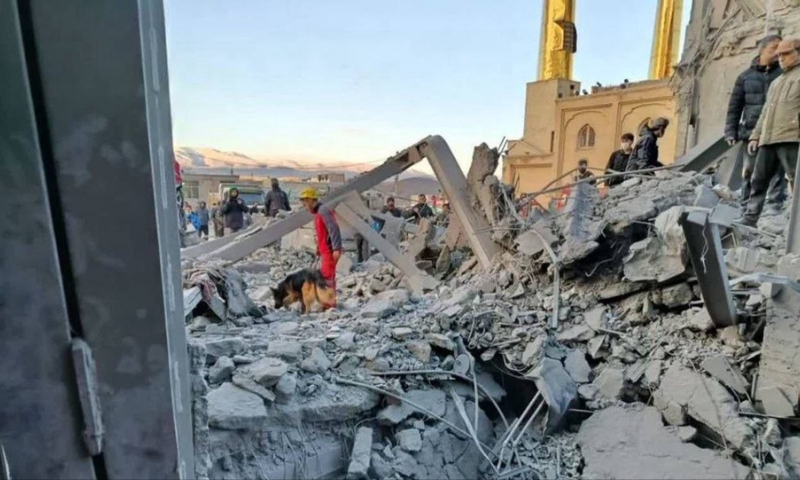
The conflict has widened significantly, with Iranian-aligned groups entering the fray and missile exchanges intensifying across the region. Israel has carried out strikes on targets in Tehran and Beirut, while hostilities have also extended into neighboring states.
Meanwhile, thousands of US troops from the 82nd Airborne Division have been deployed to the Middle East, signaling potential escalation even as diplomatic efforts continue.
Iran has rejected recent US proposals conveyed through intermediaries, calling them “unrealistic” and reaffirming its focus on self-defense. Iranian officials have also maintained that control over the Strait of Hormuz will remain a key leverage point until a ceasefire is achieved.
Amid the crisis, Pakistan has stepped up diplomatic engagement, working with regional partners to facilitate indirect communication between Washington and Tehran. Recent multilateral talks involving Saudi Arabia, Türkiye, and Egypt have emphasized the need for de-escalation and structured negotiations.
As military actions intensify and diplomatic channels remain fragile, the situation continues to pose significant risks to regional stability and the global economy.