Beijing/Islamabad, March 31, 2026: Pakistan and China on Tuesday unveiled a five-point initiative aimed at restoring peace and stability in the Gulf and the broader Middle East amid the ongoing conflict involving Iran.
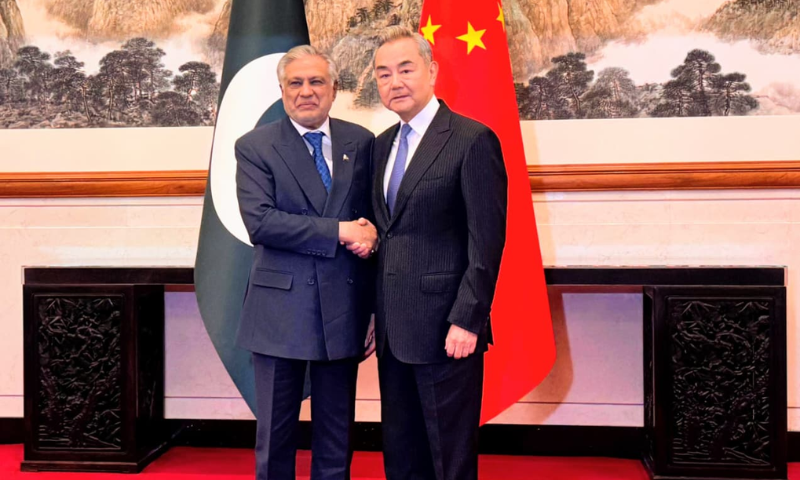
The proposal was announced following high-level talks in Beijing between Deputy Prime Minister and Foreign Minister Mohammad Ishaq Dar and his Chinese counterpart Wang Yi, during Dar’s one-day official visit.
According to a statement issued by Pakistan’s Foreign Office, both sides agreed on the urgent need for an immediate cessation of hostilities and called for intensified efforts to prevent the conflict from spreading further. They also stressed the importance of ensuring unhindered humanitarian assistance to all affected areas.
A key component of the initiative is the call for early resumption of peace talks, with both countries underscoring that dialogue and diplomacy remain the only viable path to resolving the crisis. The statement emphasized the need to safeguard the sovereignty, territorial integrity, and security of Iran and Gulf states.
Pakistan and China further urged all parties to refrain from the use or threat of force during negotiations, while committing to peaceful dispute resolution.
The two countries also highlighted the importance of protecting civilians and non-military infrastructure, calling for strict adherence to international humanitarian law. This includes halting attacks on critical facilities such as energy installations, desalination plants, power infrastructure, and peaceful nuclear sites.
Ensuring the security of global shipping routes, particularly the Strait of Hormuz, was another central pillar of the proposal. Both sides called for the protection of vessels and crew and the restoration of normal maritime traffic through the vital النفط corridor.
The initiative also stressed the need for strengthening multilateralism, supporting the central role of the United Nations in conflict resolution, and working towards a comprehensive and lasting peace framework in line with international law.
China backs closer coordination with Pakistan
Earlier, Chinese Foreign Ministry spokesperson Mao Ning said Beijing would further enhance coordination with Islamabad on the Iran situation, describing both countries as “all-weather” strategic partners committed to peace efforts.
Dar, who was received at the Diaoyutai State Guest House, held detailed discussions with Wang Yi on regional developments. The visit marks his second trip to Beijing this year, reflecting the close diplomatic engagement between the two countries.
In recent interactions, Wang Yi has acknowledged the complexity of initiating peace talks but noted such efforts are essential for restoring stability, including normal navigation through key maritime routes.
Iran welcomes Pakistan’s diplomatic role
Meanwhile, Iran’s Ambassador to Pakistan, Reza Amiri Moghadam, welcomed Islamabad’s proactive diplomatic outreach, praising its efforts to de-escalate tensions and promote regional stability.
His remarks follow a recent four-nation meeting hosted by Pakistan involving Saudi Arabia, Türkiye, and Egypt, where leaders emphasized dialogue and supported structured negotiations between Washington and Tehran.
Pakistan has increasingly positioned itself as a key mediator in the crisis, working alongside regional partners to facilitate indirect communication between the United States and Iran. Officials say these exchanges are ongoing through diplomatic channels, even as efforts continue to pave the way for direct talks.