Washington/Tehran, April 2, 2026: US President Donald Trump on Thursday urged members of NATO to “gather the courage” and deploy naval forces to the Strait of Hormuz, intensifying his criticism of the alliance amid the ongoing Middle East conflict.
Speaking to Politico, Trump said his recent national address was not focused on NATO, but insisted allies should take greater responsibility. “They gotta get guts and go in and just send your ships up there,” he said, adding, “I couldn’t care less. I didn’t need them.”
The remarks mark the latest in a series of sharp criticisms directed at NATO, which Trump has previously described as a “paper tiger.” His comments come as tensions remain high following the US-Israel war on Iran, now entering its second month.
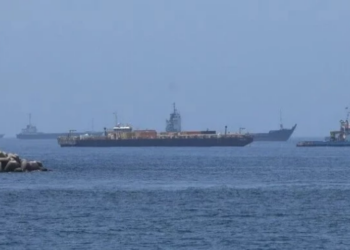
The strategic Strait of Hormuz—through which nearly 20 million barrels of oil pass daily—has remained disrupted since early March after Iran imposed restrictions in retaliation for US-Israeli strikes launched on February 28.
Trump has repeatedly called on European and Gulf allies to secure the waterway, arguing that countries dependent on Gulf oil should take the lead in reopening it.
However, French President Emmanuel Macron rejected the idea of a military solution, calling it “unrealistic” during a visit to South Korea. He stressed that reopening the strait could only be achieved through diplomatic engagement with Iran.
NATO has invoked its Article 5 collective defence clause only once—after the 2001 attacks on the United States—but several allies have criticised Trump for initiating hostilities without consultation.
Any unilateral US withdrawal from NATO would face legal barriers, including a 2023 law requiring approval from a two-thirds majority in the Senate.
Trump is expected to meet NATO Secretary General Mark Rutte in Washington next week, according to media reports.
Meanwhile, former Pentagon adviser Jasmine El-Gamal suggested Trump’s rhetoric reflects urgency rather than strategy.
“What the Iranian regime is getting… is that he is actually desperate to make a deal,” she told CNN, adding that mixed messaging—threats of escalation alongside calls for negotiations—was undermining diplomatic progress.
Her remarks came after Trump warned the US would strike Iran “very hard” in the coming weeks.
Iran’s army chief Amir Hatami warned that “no enemy troops should survive” any potential US ground invasion, signalling readiness for escalation.
Foreign Ministry spokesperson Esmaeil Baqaei also warned that Tehran would take “necessary actions” to prevent the Strait of Hormuz from being used for military aggression.
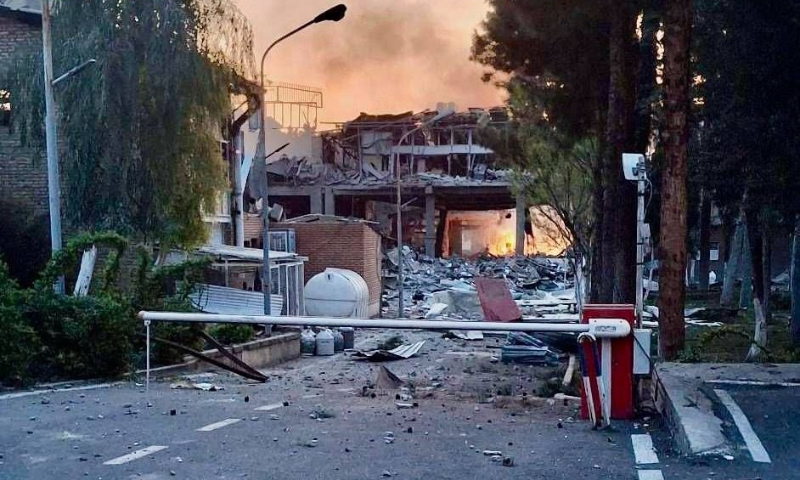
Iran further accused the US of targeting civilians, alleging that a missile strike in Lamerd killed 21 people, including teenagers. US officials have not publicly confirmed the claim.
The conflict has triggered widespread instability across the Middle East:
- Iran has launched missile and drone attacks targeting Israel, US bases, and Gulf states
- Rockets fired from Lebanon have struck northern Israel, causing injuries and damage
- Over one million people have been displaced in Lebanon amid escalating violence
Iranian officials have dismissed US claims of military success, insisting their strategic capabilities remain intact and warning of “stronger and more destructive” retaliation.
In a televised address, Trump said the US had “almost achieved” its objectives but offered no clear timeline for ending the war. He suggested the conflict could last another two to three weeks, while maintaining that the Strait of Hormuz would reopen “naturally” once hostilities cease.
However, public opinion in the United States appears to be shifting. A recent Reuters/Ipsos survey found that 60% of voters disapprove of the war, with a majority favouring a swift end—even if key objectives are not met.
With military options still on the table and diplomatic efforts faltering, the path forward remains uncertain as the conflict continues to reshape regional and global dynamics.