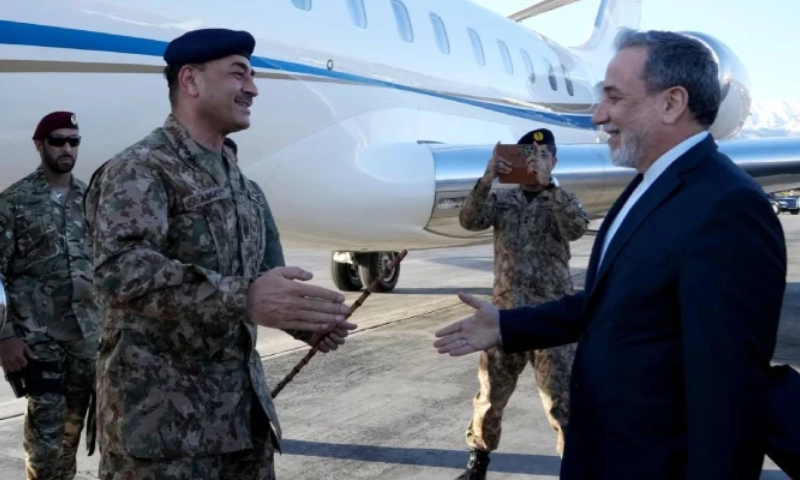
Islamabad/Tehran, April 15, 2026: Pakistan has stepped up its diplomatic efforts to consolidate a fragile ceasefire between the United States and Iran, as a high-level delegation led by Field Marshal Asim Munir and Interior Minister Mohsin Naqvi arrived in Tehran on Wednesday, according to a statement issued by the Inter-Services Public Relations (ISPR).
The visit is part of Islamabad’s ongoing mediation initiative aimed at transforming the two-week ceasefire into a durable peace agreement between Washington and Tehran, amid continued uncertainty over the future of the conflict.
Sources said preparations are underway for a second round of negotiations expected to be held in Islamabad by the end of next week, with security and administrative arrangements being finalized ahead of the high-stakes diplomatic engagement.
According to diplomatic sources, the United States delegation is expected to include JD Vance, special envoy Steve Witkoff, and former presidential adviser Jared Kushner.
The Iranian delegation is expected to be led by Parliament Speaker Mohammad Bagher Ghalibaf and Foreign Minister Abbas Araghchi.
The development follows earlier rounds of discussions held in Islamabad, where both sides attempted to reach a framework agreement to end hostilities in the Middle East.
The conflict began on February 28, when the United States and Israel launched a joint military campaign against Iran. The confrontation quickly escalated, with Iran reportedly disrupting the Strait of Hormuz and carrying out retaliatory strikes on regional targets, further intensifying tensions across the Gulf.
Hostilities formally paused on April 8 when Prime Minister Shehbaz Sharif announced a two-week ceasefire and invited both sides to Islamabad for negotiations aimed at de-escalation and long-term peace.
However, the initial round of talks—lasting approximately 21 hours—ended without agreement due to differences over Iran’s nuclear and ballistic missile programmes, sanctions relief, and the status of the Strait of Hormuz.
Despite the lack of breakthrough, Pakistan has continued efforts to facilitate dialogue, with officials describing Islamabad as an emerging neutral platform for high-level diplomatic engagement.
Iranian Foreign Ministry spokesperson Esmaeil Baqaei confirmed that messages continue to be exchanged between Tehran and Washington via Pakistan, describing Islamabad’s role as central to maintaining communication channels.
He indicated that discussions in the previous Islamabad round included ceasefire arrangements, sanctions relief, compensation for war damages, and the issue of frozen Iranian assets, though no consensus was reached.
A senior US official also confirmed ongoing engagement with Iran, although Washington has not formally agreed to extend the ceasefire.
The latest visit underscores Pakistan’s increasingly prominent role as a mediator in one of the most sensitive geopolitical crises in recent years. Officials say Islamabad’s diplomatic initiative has helped maintain dialogue between the two adversaries and prevent further escalation.
While challenges remain, including deep mistrust between Washington and Tehran, diplomatic observers note that continued engagement through Pakistan may provide a narrow but significant pathway toward sustained de-escalation and potential long-term settlement.
The second round of talks expected in Islamabad is now seen as a crucial test of whether the fragile ceasefire can be translated into a broader peace framework.