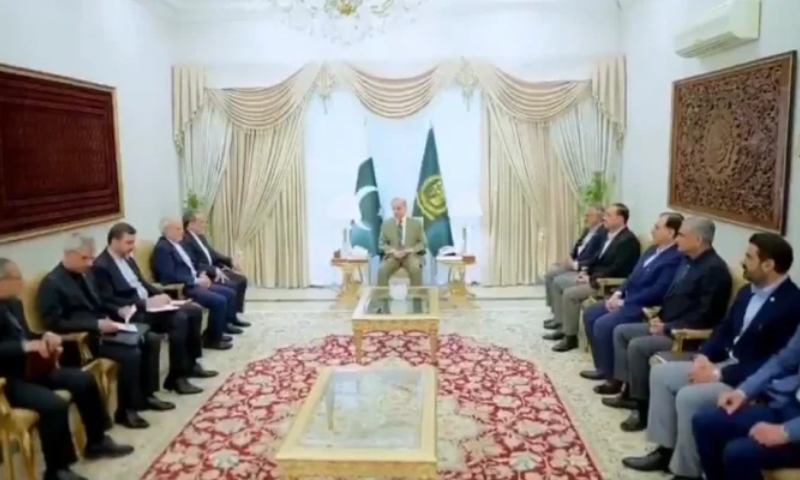
Islamabad/Tehran/Washington, April 25, 2026: Iranian Foreign Minister Abbas Araghchi held key meetings with Prime Minister Shehbaz Sharif and Chief of Army Staff Field Marshal Asim Munir on Saturday, as uncertainty surrounds potential talks between Iran and the United States.
Araghchi, who arrived in Islamabad late Friday, discussed regional developments and bilateral ties during his meeting with the prime minister, according to an official statement. Deputy Prime Minister and Foreign Minister Ishaq Dar and Interior Minister Mohsin Naqvi were also present.
The Iranian foreign minister also held a separate meeting with Field Marshal Munir, where both sides exchanged views on matters of mutual interest and the broader regional situation, state broadcaster PTV News reported.
Talks uncertain despite diplomatic activity
The meetings come as US officials, including special envoy Steve Witkoff and Jared Kushner, were expected to travel to Pakistan for discussions with the Iranian side, according to the White House.
However, Tehran signaled reluctance, with an Iranian foreign ministry spokesperson stating that officials do not plan to meet US representatives directly, adding that concerns would instead be conveyed through Pakistan as a mediator.
US Defence Secretary Pete Hegseth said Iran still has an opportunity to reach a “good deal,” urging Tehran to abandon its nuclear ambitions in verifiable ways.
Meanwhile, US President Donald Trump claimed Iran may present a proposal aimed at meeting US demands, though details remain unclear. White House Press Secretary Karoline Leavitt said Washington had observed some progress in recent days.
Vice President JD Vance is also expected to travel to Pakistan if talks advance, officials said.
Pakistan reaffirms mediator role
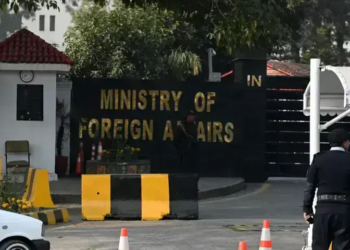
Separately, Foreign Minister Ishaq Dar chaired a meeting to review regional developments, reiterating that Pakistan is facilitating Iran-US dialogue to promote peace and stability.
He emphasized that only official statements reflect Pakistan’s position, cautioning media outlets against relying on unnamed sources or speculative reporting.
Conflict drives global energy concerns
The diplomatic efforts unfold against the backdrop of escalating tensions, including the ongoing US-Israeli war on Iran, now in its ninth week. The conflict has disrupted global energy flows, with Iran restricting passage through the strategic Strait of Hormuz, through which roughly one-fifth of global oil supplies typically pass.
Oil markets have reacted sharply, with prices surging amid uncertainty. Shipping activity has also dropped significantly, with only a handful of vessels crossing the strait daily compared to normal volumes prior to the conflict.
Regional security developments
In Europe, Defence Minister Boris Pistorius said Germany is preparing a potential naval deployment to safeguard maritime routes, including sending a minesweeper to the Mediterranean as a precaution.
Despite ceasefire extensions in some areas, including between Israel and Lebanon, violence continues to flare in parts of the region, complicating efforts to reach a broader settlement.
Diplomatic engagements involving Pakistan, Iran, and global powers are expected to intensify in the coming days, as stakeholders seek a pathway to de-escalation and stability.