Tehran/Washington, May 28, 2026: Iran’s Revolutionary Guard said on Thursday it targeted a United States airbase after the US military carried out strikes on what Washington described as an Iranian drone operation near the Strait of Hormuz, escalating tensions despite a fragile ceasefire between the two countries.
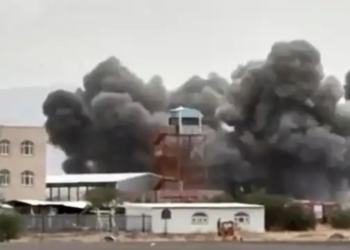
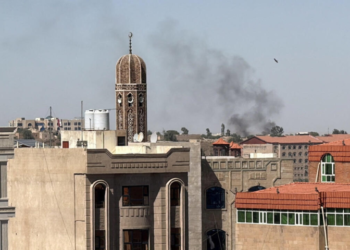
According to a US official quoted by Reuters, the American military shot down four Iranian attack drones and struck a ground control station in the Iranian port city of Bandar Abbas that was preparing to launch a fifth drone.
“These actions were measured, purely defensive and intended to maintain the ceasefire,” the official said while speaking on condition of anonymity.
In response, Iran’s Islamic Revolutionary Guard Corps (IRGC) announced that it had targeted a US airbase linked to the operation near Bandar Abbas airport, according to Iran’s Tasnim news agency.
The IRGC did not specify the location of the base. However, Kuwait’s military later said its air defence systems were responding to an “enemy” attack on Thursday.
Israel also reported sirens sounding in northern areas due to hostile aircraft activity amid rising regional tensions.
The latest escalation has raised concerns over the future of the fragile ceasefire between Washington and Tehran, which came into effect in early April. The developments also dampened hopes for a possible peace agreement and triggered renewed volatility in global energy markets.
Oil prices rebounded sharply after the reports, with US crude futures rising more than three per cent after having fallen over five per cent a day earlier. Global stocks declined while the US dollar strengthened.
The conflict, which began on February 28 with US and Israeli strikes, has already killed thousands and caused major disruptions in energy markets worldwide.
US President Donald Trump on Wednesday dismissed reports aired by Iranian state television claiming that Tehran and Washington were close to a compromise agreement regarding commercial shipping through the Strait of Hormuz.
According to the Iranian report, the proposed framework would restore shipping in the strategic waterway to prewar levels within a month, with Iran and Oman jointly managing maritime traffic.
Rejecting the report, Trump said no country would control the Strait of Hormuz, describing it as international waters.
“Nobody’s going to control the strait,” Trump said during a cabinet meeting attended by the media. He also warned that Oman must “behave just like everybody else.”
Trump further stated that the United States was not considering easing sanctions on Iran and reiterated that he was not yet satisfied with the status of negotiations.
The White House later dismissed the Iranian television report as a “complete fabrication.”
Iranian officials, however, maintained that Tehran would not retreat from its demands, including the right to enrich uranium, authority over the strait, and the lifting of sanctions.
Ebrahim Azizi, head of the Iranian parliament’s national security committee, said Trump was alternating between threats and calls for negotiations in an attempt to break the diplomatic deadlock.
“The bottom line is Iran’s never going to have a nuclear weapon,” US Secretary of State Marco Rubio said during the cabinet meeting.
Iran has consistently maintained that its nuclear programme is intended solely for peaceful purposes.