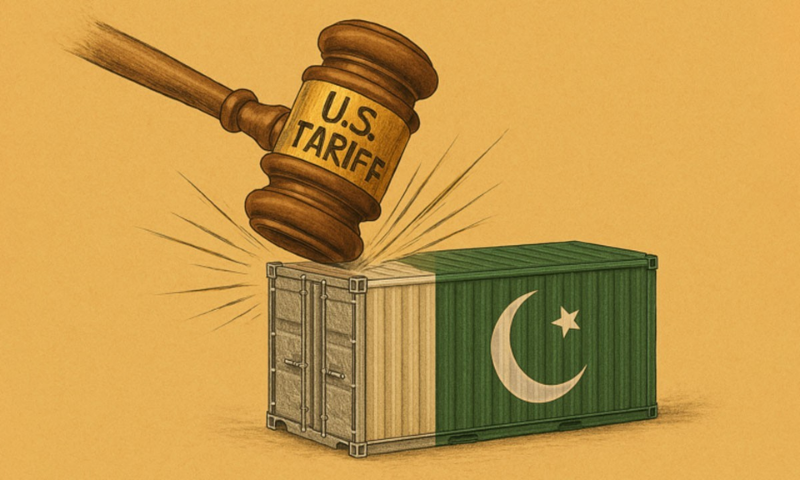
Washington, June 3,2026: The Office of the United States Trade Representative has proposed new tariffs on 60 economies, including Pakistan and India, over what it describes as inadequate measures to prevent the import of goods produced through forced labour.
According to a government filing, the proposed duties range between 10 per cent and 12.5 per cent and will undergo a public consultation process before a final decision is made.
The proposal follows investigations launched by the United States into a number of major trading partners, including China, the European Union, and Japan regarding enforcement of restrictions on goods allegedly produced with forced labour.
The USTR stated that 54 economies failed to impose and effectively enforce bans on imports linked to forced labour, while six others — including Pakistan, Canada, Ecuador, the European Union, Indonesia and Mexico — were found not to have effectively enforced such prohibitions.
As a result, Pakistan has been included among the countries facing a proposed 10 per cent tariff on certain exports to the United States.
Other countries in the same category include Bangladesh, Malaysia, Cambodia, Argentina and the United Kingdom.
The remaining 45 countries investigated could face additional duties of up to 12.5 per cent.
USTR chief Jamieson Greer said the failure of key trading partners to address imports linked to forced labour was unacceptable.
He argued that such practices create unfair competition for American workers and businesses.
“We will no longer tolerate this disparity,” Greer said, adding that trading partners must do more to ensure international trade does not encourage or sustain forced labour practices.
The proposed tariffs include several exemptions covering products such as beef, coffee, and selected fruits and nuts.
In addition, goods from Canada and Mexico that comply with the North American free trade framework, as well as certain textile and apparel products, would be exempt from the proposed measures.
The USTR has invited public comments on the proposal until July 6 and is expected to hold hearings before making a final determination.\
The announcement comes ahead of the July 24 expiry of a temporary 10 per cent tariff introduced by the administration of Donald Trump after legal challenges affected earlier tariff measures.
Responding to the proposal, China rejected allegations of forced labour and criticised what it described as unilateral tariff measures.
Chinese Foreign Ministry spokesperson Mao Ning said there was “no so-called forced labour in China” and accused Washington of using the issue for political purposes.
The European Commission also described the proposed tariffs as unjustified and reaffirmed its commitment to implementing trade understandings reached with Washington last year.
Meanwhile, the Swiss government rejected US findings concerning its handling of goods allegedly produced with forced labour, arguing that Swiss policies do not harm American industry and that its position had already been communicated to US authorities.
The proposed measures are expected to trigger further discussions between Washington and affected trading partners in the coming weeks as the consultation process continues.