BÜRGENSTOCK, Switzerland, June 22, 2026: Diplomatic efforts led by Pakistan and Qatar achieved a significant breakthrough on Monday as the United States and Iran concluded high-level talks in Switzerland with an agreement on a roadmap toward a comprehensive final settlement within the next 60 days.
The first High-Level Committee Meeting under the Islamabad Memorandum of Understanding (MoU), held at the Lake Lucerne Summit in Bürgenstock, ended after nearly 18 hours of intensive negotiations and consultations, with both sides reporting encouraging progress on key issues, including nuclear inspections, frozen Iranian assets, maritime security in the Strait of Hormuz, and regional de-escalation efforts.
US Vice President JD Vance described the talks as productive and said Tehran had agreed to allow international nuclear inspectors to return to Iran and had accepted mechanisms for handling frozen assets and maintaining maritime security in the strategically vital Strait of Hormuz.
“We made great progress,” Vance told reporters following the talks. He said discussions on nuclear inspections could begin as early as this week, with the International Atomic Energy Agency (IAEA) expected to engage with Iranian officials to verify compliance with the preliminary understanding.
According to Vance, despite reports that the Iranian delegation had considered leaving the negotiations, discussions continued well past 1:00am local time.
“There was a little bit of threatening and whining, but at the end of the day the talks continued, and we made great progress,” he remarked.
Pakistan hails historic diplomatic progress
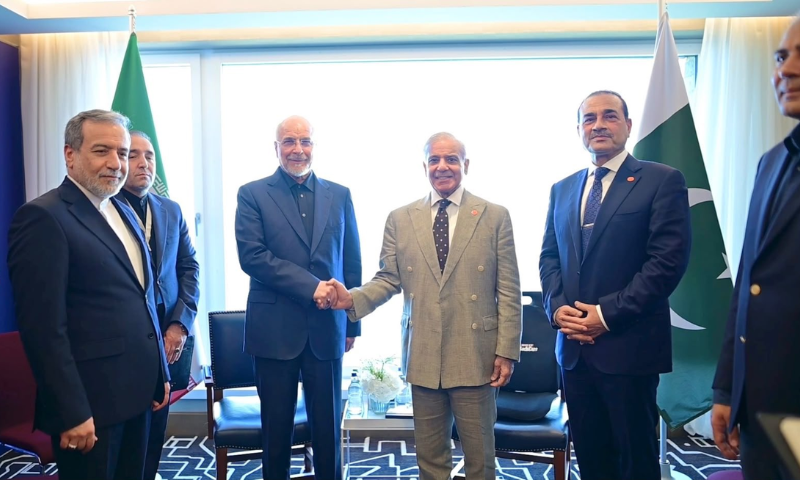
Prime Minister Shehbaz Sharif welcomed the outcome of the talks, describing them as a major diplomatic achievement and a positive step toward regional peace and stability.
In a statement issued after the conclusion of the meeting, the Prime Minister said the discussions were held in a “positive and constructive atmosphere” and produced tangible outcomes.
“The discussions yielded encouraging progress, including agreement on a roadmap toward a final deal within 60 days, the establishment of a High-Level Committee to provide political oversight, and the commencement of further technical talks,” the Prime Minister stated.
Sharif commended both Washington and Tehran for their commitment to dialogue and diplomacy while reaffirming Pakistan’s role as an honest facilitator in efforts to resolve international disputes peacefully.
“Pakistan will continue to play its honest and sincere role in advancing dialogue and diplomacy towards a peaceful and lasting resolution,” he said.
The Prime Minister also acknowledged the contributions of Chief of Defence Forces and Chief of Army Staff Field Marshal General Asim Munir, Deputy Prime Minister and Foreign Minister Senator Ishaq Dar, Interior Minister Mohsin Naqvi, and Pakistan’s diplomatic team for helping advance the negotiations.
He further thanked Qatar for its critical support and Switzerland for hosting the talks.
Iran sees ‘important steps’ toward final agreement
Iran also described the negotiations as constructive, though officials stressed that formal nuclear negotiations had not yet begun.
Foreign Ministry spokesman Esmaeil Baghaei said a brief discussion took place regarding Iran’s nuclear programme but noted that detailed negotiations on the issue were still pending.
“Important steps were agreed upon to pave the way for the start of negotiations related to the final agreement,” Baghaei said.
He added that the parties had agreed to establish a new monitoring mechanism, described as a “deconfliction cell,” aimed at overseeing ceasefire arrangements and reducing tensions, particularly in Lebanon.
Baghaei further revealed that discussions covered the issuance of licenses for Iranian oil exports, the release of frozen Iranian assets, and maritime security in the Strait of Hormuz.
Technical teams from both sides will continue working on implementation mechanisms and other issues necessary for carrying forward the Islamabad MoU.
Strait of Hormuz and frozen assets among key issues
One of the most significant outcomes of the talks was the agreement to establish mechanisms ensuring freedom of navigation through the Strait of Hormuz, a critical route for global energy supplies.
Vance said Washington and Tehran had agreed to continue technical discussions on maintaining open shipping lanes and preventing future disruptions.
The US side also outlined proposals regarding the potential release of frozen Iranian assets, with safeguards to ensure that any funds released would be directed toward humanitarian and economic needs rather than military activities.
The proposals reportedly involve oversight mechanisms supported by international partners, including Qatar.
China supports Pakistan-Qatar mediation efforts
China welcomed the progress achieved in Switzerland and praised the mediation efforts undertaken by Pakistan and Qatar.
Chinese Foreign Ministry spokesman Guo Jiakun urged Washington and Tehran to maintain the positive momentum.
“China supports Pakistan and Qatar and all relevant parties in their mediation efforts,” he said, expressing hope that both sides would continue working in the same direction to achieve positive results.
Regional tensions remain
Despite progress on the US-Iran track, differences persist over developments in Lebanon.
Israeli National Security Minister Itamar Ben-Gvir publicly rejected any ceasefire arrangement in Lebanon, while Iranian officials warned Israel against maintaining a military presence in southern Lebanon.
The issue remains one of the most sensitive aspects of the broader regional de-escalation process being pursued through the Islamabad MoU framework.
Technical talks to continue
Following the conclusion of the summit, mediators Pakistan and Qatar announced that technical working groups would remain engaged in Bürgenstock throughout the week to advance negotiations on outstanding issues.
The mediators said the parties had agreed to establish a High-Level Committee, launch technical working groups, and pursue a 60-day roadmap aimed at achieving a comprehensive final settlement.
Iran’s delegation, led by Parliament Speaker Mohammad Bagher Ghalibaf, departed Switzerland for Tehran after the talks, while technical experts from both sides remained engaged in follow-up discussions.
The breakthrough in Bürgenstock marks the first major success under the Islamabad Memorandum of Understanding and underscores Pakistan’s growing diplomatic role in facilitating dialogue between adversaries amid a period of heightened regional tensions.
With technical negotiations now underway and political oversight mechanisms established, diplomats expressed cautious optimism that the process could eventually lead to a broader agreement addressing nuclear issues, regional security concerns, sanctions relief, and long-term stability in the Middle East.