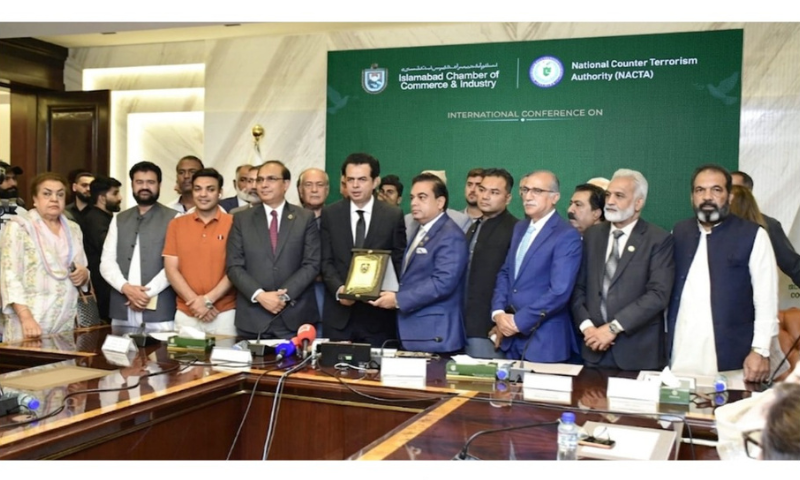
Islamabad, June 24,2026: Minister of State for Interior Talal Chaudhry has said that the government is undertaking unprecedented measures to transform Islamabad into a modern, sustainable, and globally competitive capital city. He stated that major infrastructure interventions are being implemented to address longstanding challenges in water supply, waste management, traffic flow, security, hospitality, and urban services, laying the foundation for the city’s needs over the next 40 to 50 years.
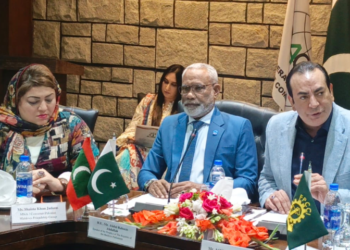
Addressing a well-attended session at ICCI, Talal Chaudhry observed that despite being the federal capital, Islamabad lacks several essential municipal institutions and services found in modern cities. He noted that rapid population growth has put immense pressure on existing infrastructure, creating significant challenges in water management, solid waste disposal, traffic regulation, and urban planning. He said the government has already initiated around fifteen major infrastructure interventions and is working to remove more than twenty-five key bottlenecks affecting the city’s development.
The minister highlighted that billions of rupees are being invested in the Safe City project, which will evolve into one of the country’s first smart city systems, integrating security, public services, and urban management. He further revealed that new dams are being planned to address future water requirements, while efforts are underway to establish modern waste management systems, improve municipal services, and strengthen Islamabad’s capacity to accommodate growing business and diplomatic activities. He also announced plans for a state-of-the-art Convention Centre and Expo Centre, which will provide the business community with world-class facilities and reduce dependence on other cities for international exhibitions and conferences.
Earlier welcoming the Minister, ICCI President Sardar Tahir Mehmood said that the Islamabad Chamber, as the representative institution of the federal capital’s business community, fully supports initiatives aimed at improving Islamabad’s infrastructure and investment climate. He appreciated the government’s focus on long-term urban development and stressed that sustainable economic growth requires modern civic facilities, efficient municipal services, and a business-friendly environment.
The ICCI President also raised concerns regarding rising FAR charges for multistory buildings and regulatory issues affecting the real estate and construction sectors by emphasizing that the sector be facilitated as per the vision of the Prime Minister of Pakistan. He stressed that while the federal budget had introduced several positive measures for the sector, these benefits could only be fully realized if relevant authorities reviewed valuation mechanisms and adopted policies that encourage investment, construction activity, and job creation. He reaffirmed ICCI’s commitment to working closely with the government to address business community concerns and accelerate economic growth in the federal capital.