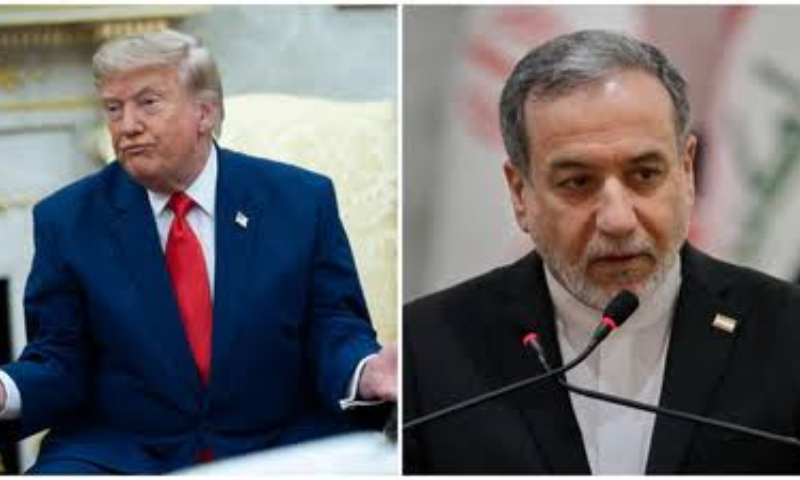
Tehran, July 26, 2026: Iran announced on Sunday that it had suspended its retaliatory military operations against Gulf states and United States interests in the region following a pause in US airstrikes, raising cautious hopes for de-escalation after nearly two weeks of intense fighting.
Iranian army spokesman Brig. Gen. Mohammad Reza Akraminia said Tehran’s military operations had been retaliatory in nature and had now been halted.
“Our strategy has essentially been retaliatory, and we have also halted our retaliatory operations,” Akraminia was quoted as saying.
The announcement comes after nearly two weeks of renewed hostilities centred on the Strait of Hormuz. No Iranian attacks on Gulf states were reported on Sunday, while Washington has also refrained from launching strikes on Iran for two consecutive nights.
Regional diplomatic efforts also intensified as the foreign ministers of Qatar and Saudi Arabia held telephone talks on the latest developments.
According to Qatar’s Foreign Ministry, Prime Minister and Foreign Minister Sheikh Mohammed bin Abdulrahman Al Thani and Saudi Foreign Minister Prince Faisal bin Farhan reviewed bilateral cooperation and discussed joint efforts to reduce regional tensions and strengthen security and stability.
Separately, Egypt and Oman continued consultations with Iran on regional security and maritime stability.
Iran said it had made progress in discussions with Oman on operational mechanisms to ensure the safe passage of commercial vessels through the Strait of Hormuz.
Foreign Ministry spokesman Esmaeil Baqaei said Iranian and Omani officials held several rounds of talks in Tehran over the weekend, describing the discussions as “productive” and confirming that technical and political consultations would continue.
Tehran stressed there had been no disruption to normal maritime traffic through the strategic waterway.
Qatar also announced the full resumption of maritime navigation for all vessels from Sunday after a two-week suspension prompted by regional security concerns.
The Ministry of Transport urged shipping operators to comply with maritime regulations to ensure safe navigation.
Commercial shipping through the Strait of Hormuz had been severely affected in recent weeks as several shipping companies diverted vessels because of the conflict.
In Yemen, Houthi forces claimed they had shot down a Turkish-made reconnaissance drone allegedly linked to Saudi Arabia over Al-Jawf province.
Houthi military spokesman Yahya Saree said the aircraft had been conducting hostile operations when it was intercepted.
Meanwhile, Kuwait strongly condemned recent Houthi attacks on commercial shipping in the Red Sea, expressing full solidarity with Saudi Arabia and supporting measures taken by Riyadh to protect maritime security.
Syrian President Ahmed al-Sharaa said Damascus had no intention of becoming involved in the conflict in neighbouring Lebanon.
“We fear the expansion of the war zone in the region,” he said, reaffirming support for the Lebanese state’s authority over decisions related to war and peace.
Although Tehran announced a pause in retaliatory operations, senior Iranian military officials warned that any renewed US or Israeli military action could trigger a wider regional conflict.
Akraminia said Iran remained prepared for all scenarios, claiming its operational reach extended across the region, including US military installations in Jordan, Kuwait and Bahrain.
The Islamic Revolutionary Guard Corps (IRGC) also warned that Israel would face severe consequences if it resumed military action against Iran.
An IRGC spokesman further warned that any country assisting US military operations, including Britain or Gulf states, could become a “legitimate target.”
Iranian state media reported that IRGC naval forces fired warning shots at six vessels attempting to transit the Strait of Hormuz outside routes designated by Iranian authorities, forcing them to alter course.
The reports could not be independently verified.
Media reports in the United States said President Donald Trump had decided to suspend further military strikes against Iran after 13 consecutive days of operations.
According to The New York Times and Axios, the decision followed concerns over dwindling US air defence missile stockpiles and a desire to allow more room for diplomatic efforts, although contingency plans remain in place should major combat resume.
Despite the pause in airstrikes, the US Central Command (CENTCOM) said its naval blockade against Iran remained in force.
CENTCOM said it had intercepted, redirected or boarded several commercial vessels in recent days to enforce maritime restrictions in the Arabian Sea and Gulf of Oman.
Iranian military officials reiterated claims that Tehran had targeted US military facilities in Jordan, Kuwait and Bahrain during recent retaliatory operations following American strikes on Iranian territory.
Iran also claimed that significant damage had been inflicted on US military infrastructure in Iraq’s Erbil region and asserted that it had begun deploying a new generation of attack drones with greater range and precision than the previously used Arash-2 system.
Kuwait, however, rejected media reports alleging its involvement in military operations against Iran, insisting it had neither participated in attacks nor allowed its territory, airspace or territorial waters to be used for offensive operations.