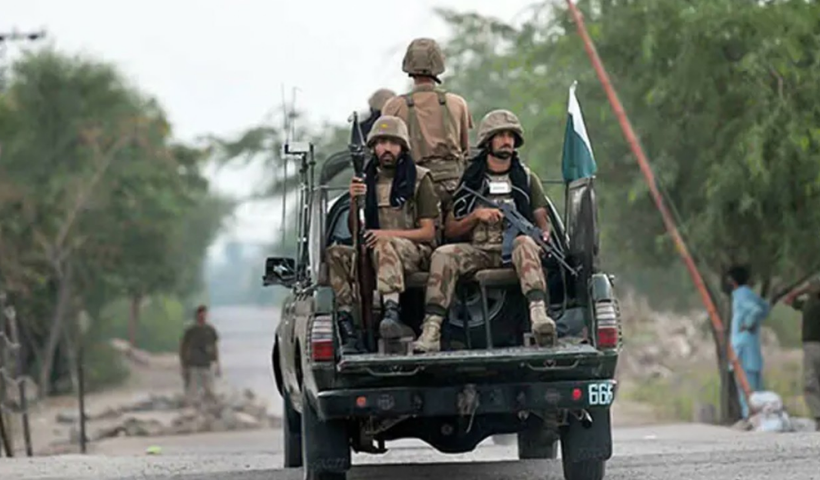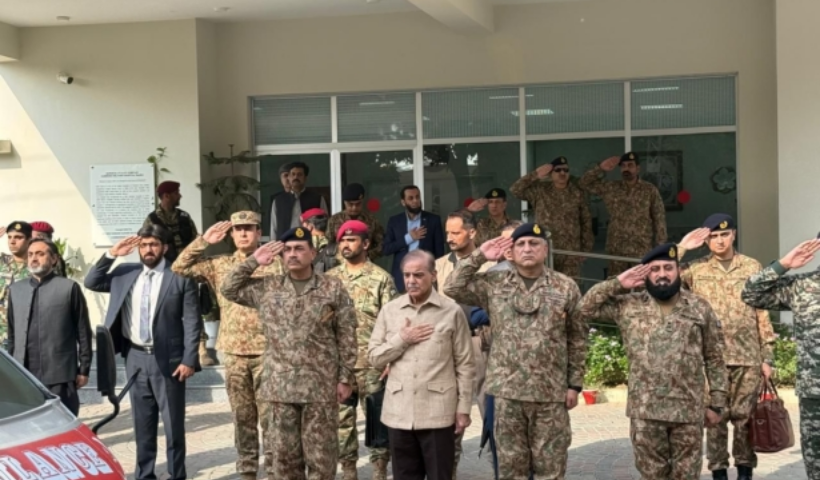
Bannu, September 13, 2025: Prime Minister Shehbaz Sharif, during his visit to Bannu alongside Chief of Army Staff (COAS) Field Marshal Syed Asim Munir, reiterated Pakistan’s firm resolve to eradicate terrorism, declaring that Afghanistan must choose between siding with terrorists or standing with Pakistan.
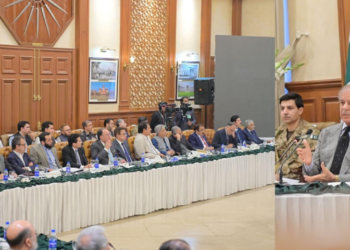
Chairing a high-level meeting on counterterrorism, the premier warned that there would be “zero tolerance for ambiguity” on the matter. He stressed that Pakistan would continue to deliver a decisive response against terrorism and those aiding Indian proxies.
“Anyone supporting foreign elements or acting as their facilitator will be treated as their instrument — and answered in the same language they understand,” PM Shehbaz said.
He pointed out that Afghan nationals were found involved in several terrorist incidents inside Pakistan, adding that undocumented Afghan residents would soon be expelled. Pakistan, he recalled, has hosted Afghans for more than four decades, from the Soviet invasion through the Taliban’s return in 2021. Many refugees were born and raised in Pakistan, while others still await relocation abroad.
Official data shows that since April 2025, over 554,000 Afghans have returned under the Illegal Foreigners Repatriation Plan, including about 145,000 in August alone, following a crackdown on undocumented residents.
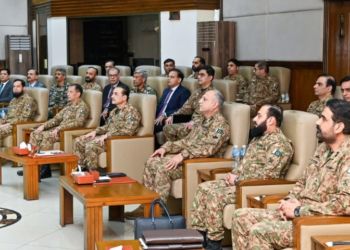
The prime minister reaffirmed that the people, state, and armed forces of Pakistan stand united “like a fortified wall” against Indian proxies, rejecting divisive politics and misleading narratives. He also visited the Combined Military Hospital (CMH) Bannu to inquire after injured security personnel. Earlier, the Peshawar Corps Commander briefed him on the regional security situation.
Security sources maintain that the masterminds and facilitators of terrorism remain based in Afghanistan with backing from India. The visit came days after two major counterterrorism operations in Khyber Pakhtunkhwa (KP) between September 10 and 13, in which at least 12 soldiers were martyred and 35 militants of the Indian proxy Fitna al-Khawarij were killed, according to the Inter-Services Public Relations (ISPR).
In Bajaur, security forces launched an intelligence-based operation (IBO), killing 22 militants after an intense firefight. In a separate South Waziristan operation, 13 more terrorists were eliminated, though 12 soldiers embraced martyrdom in heavy clashes.
The state uses the term Fitna al-Khawarij for the outlawed Tehreek-e-Taliban Pakistan (TTP), which has reportedly been carrying out cross-border attacks from Afghan soil.
Pakistan and Afghanistan share a 2,500-kilometre porous border with multiple crossing points critical for trade and people-to-people ties. Yet, terrorism remains the most contentious issue between the neighbours. Islamabad has consistently urged Kabul to prevent its soil from being used by groups such as the TTP.
These concerns were echoed in a United Nations Security Council (UNSC) report by the Analytical Support and Sanctions Monitoring Team, which confirmed a nexus between Kabul and the TTP, including logistical, operational, and financial support.
Meanwhile, Pakistan has seen a sharp escalation in militant violence. According to the Pakistan Institute for Conflict and Security Studies (PICSS), militant incidents surged by 74% in August compared to July, leaving 194 people dead.