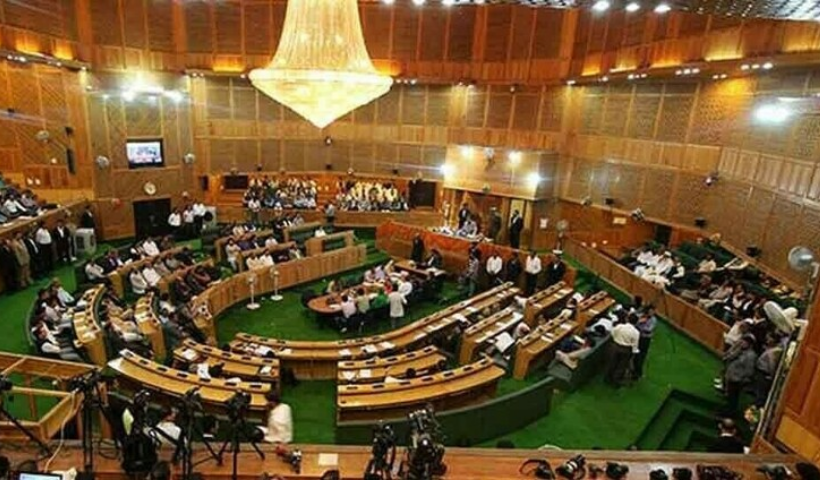
Muzaffarabad, October 21, 2025: The Pakistan Muslim League-Nawaz (PML-N) has announced its withdrawal from the Azad Jammu and Kashmir (AJK) government, declaring that it will now sit on the opposition benches in the Legislative Assembly.
Addressing a press conference on Tuesday, PML-N AJK President Shah Ghulam Qadir said that if the Pakistan Peoples Party (PPP) brings a no-confidence motion against the government, it would be within its “democratic right.” However, he clarified that the PML-N would not be part of any new coalition formed as a result.
“We will not support any unnatural or forced coalition. From now on, our role will be that of a constructive opposition,” Qadir asserted.
He cautioned that any party member who violated the official policy would face disciplinary action, adding that the PML-N would “remain active for the welfare of refugees and overseas Kashmiris.”
The PML-N leader maintained that a stable and representative government in AJK could only emerge through transparent general elections.
“We will run a vigorous election campaign under the leadership of Nawaz Sharif and Shehbaz Sharif,” he said.
Qadir also reaffirmed his party’s commitment to playing a positive role in resolving AJK’s constitutional and political crisis.
Currently, the AJK government is led by Prime Minister Chaudhry Anwarul Haq, a former Pakistan Tehreek-e-Insaf (PTI) member, who assumed office in April 2023 after former premier Sardar Tanveer Ilyas was disqualified for contempt of court.
Haq, previously serving as assembly speaker since 2021, was elected unopposed as leader of the house after forming a 12-member forward bloc within the PTI and forging an alliance with the PPP and PML-N.
The PML-N’s decision comes amid political and social unrest in the region, following violent protests that left at least nine people dead, including three police personnel, and injured over 100 others.
The unrest, driven by the Awami Action Committee (AAC), had brought life in AJK to a standstill through widespread shutdowns and clashes in Muzaffarabad. The AAC had issued a 38-point charter of demands, including the abolition of 12 reserved seats for refugees and the rollback of what it termed “privileges of the elite.”
The crisis was eventually defused on October 3, after negotiations between the AAC and the federal government led to a consensus agreement.