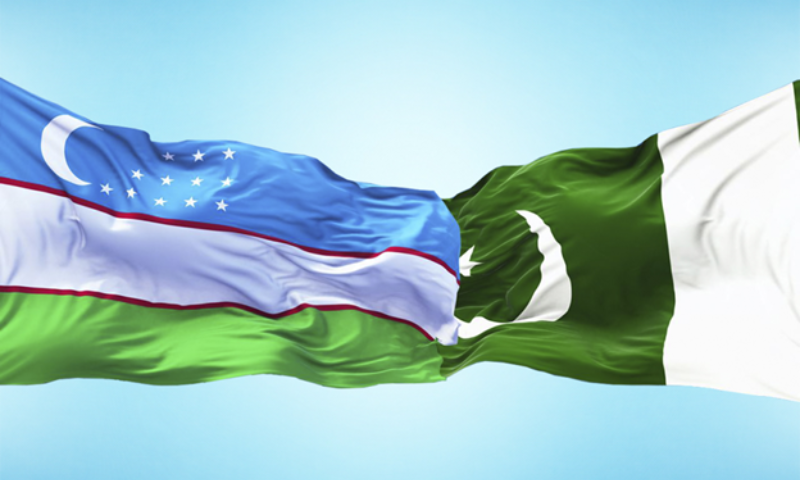
Islamabad/Tashkent, January 26, 2026: A state visit by President of the Republic of Uzbekistan Shavkat Mirziyoyev to the Islamic Republic of Pakistan is scheduled for February 2026, a move expected to mark a defining milestone in the evolution of bilateral relations and elevate the strategic partnership between the two countries to a new level.
The high-level talks will take place amid an unprecedented intensification of political dialogue and will focus on the practical realization of a key economic objective: increasing bilateral trade to $2 billion in the coming years. Central to the agenda is a structural transformation of economic cooperation, with both sides aiming to move beyond traditional trade in goods toward sustainable industrial cooperation, joint high-tech manufacturing, and the systematic removal of tariff and non-tariff barriers under an expanded Preferential Trade Agreement (PTA).
Trade growth and ambitious targets
Bilateral trade has shown steady and resilient growth in recent years. By the end of 2024, trade volume stood at $404 million, while from January to November 2025 it reached $434.4 million, reflecting a 16.9 percent year-on-year increase. Compared with the same period in 2023, the growth amounted to 22 percent, underlining the robustness of economic ties despite global volatility.
However, leaders on both sides acknowledge that current figures fall short of the true economic potential. During preparatory discussions, clear performance benchmarks were set for economic ministries, with an immediate target of $1 billion in mutual trade, followed by a medium-term goal of $2 billion. Achieving these targets will require a qualitative shift toward value-added production and deeper industrial cooperation.
Expanding the PTA and digital trade
A cornerstone of the upcoming negotiations will be the expansion of the PTA signed in March 2022. Authorities are working to increase the number of goods covered under preferential tariffs from 17 to 100, a move expected to significantly boost exports on both sides.
Alongside tariff liberalization, both countries are advancing digital integration. An Electronic Data Interchange (EDI) system between the customs authorities of Uzbekistan and Pakistan is under development to enable real-time data sharing, reduce border delays, and enhance transparency in cargo clearance. Measures to harmonize sanitary, phytosanitary, and quarantine standards are also being finalized to ease trade in agricultural and industrial goods.
Strengthening financial infrastructure
A major breakthrough in facilitating trade will be the opening of a National Bank of Pakistan (NBP) branch in Uzbekistan, expected to become fully operational in 2026. According to Alisher Duschanov, Trade and Economic Counsellor at the Uzbek Embassy, the bank’s presence will streamline settlements, enable trade financing, and reduce reliance on third-country intermediaries.
Preparations for this step included high-level banking consultations in Karachi in April 2025 between the Central Bank of Uzbekistan, the State Bank of Pakistan, and major Pakistani banks, paving the way for closer financial integration.
Focus on key sectors
Industrial cooperation will form the backbone of the new economic phase. The textile sector has emerged as a flagship area, with Uzbekistan seeking foreign investment to deepen cotton processing. Pakistani textile firms, leveraging their expertise in garment manufacturing and global marketing, are viewed as strategic partners. Currently, 130 joint ventures with Pakistani capital are operating in Uzbekistan.
The pharmaceutical sector is another priority, given Uzbekistan’s annual pharmaceutical imports of around $3 billion. Pakistani companies have shown strong interest in localizing production, particularly in the Tashkent Pharma Park. Joint projects are already underway, with firms such as Novugen Pharma operational and new memorandums signed with Bio Labs and Caraway Pharmaceuticals.
Cooperation is also expanding into leather and footwear manufacturing, mining—particularly copper development at the Almalyk Mining and Metallurgical Complex—agricultural machinery, and electrical equipment, with an eye on regional and third-country markets.
Agriculture and technology cooperation
Agriculture represents a natural area of complementarity. Pakistan has become a major destination for Uzbek fruit and vegetable exports, accounting for nearly 20 percent of such exports as of early 2025. At the same time, Pakistan is set to increase exports of mangoes, mandarins, rice, potatoes, and chilled meat to Uzbekistan and CIS markets.
Beyond trade, both sides are advancing cooperation in agricultural research and innovation. A Memorandum of Understanding is being prepared between Uzbekistan’s Ministry of Agriculture and the Pakistan Agricultural Research Council to promote collaboration in seed development, breeding, and modern farming technologies.
Toward systemic integration
The February visit is expected to symbolize a shift from confidence-building to economic pragmatism, underpinned by long-term infrastructure projects. Foremost among these is the Trans-Afghan Railway, which would provide Uzbekistan direct access to Pakistani ports at Karachi and Gwadar, reducing transport costs and transforming regional connectivity. For Pakistan, the project promises enhanced access to Central Asian and CIS markets.
A key political outcome of the visit will be the launch of the Supreme Council of Strategic Partnership, with its first meeting planned for 2026. This mechanism will institutionalize bilateral cooperation, ensure oversight of agreements, and allow for coordinated responses to global economic changes.
With strong political will, expanding infrastructure, and a clear economic roadmap, Uzbekistan–Pakistan relations are poised to evolve into a sustainable model of regional partnership, delivering tangible benefits for both economies.