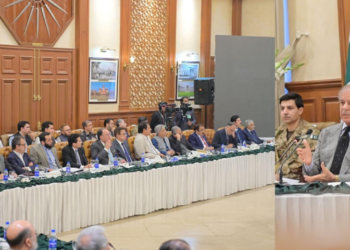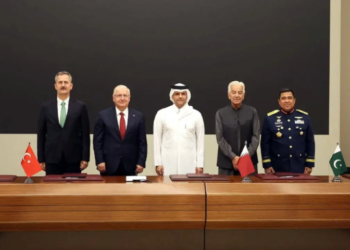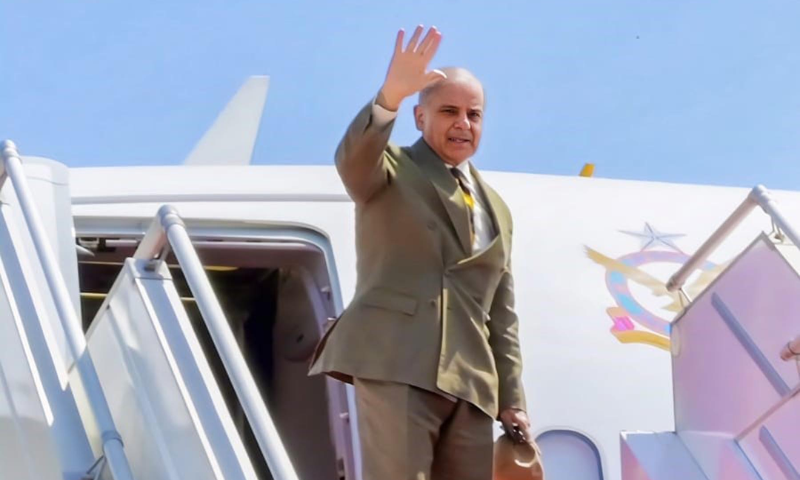
Islamabad/Washington/Tehran, April 15, 2026: Pakistan’s Prime Minister Shehbaz Sharif has embarked on a crucial three-nation visit to Saudi Arabia, Qatar, and Türkiye from April 15 to 18, underscoring Islamabad’s proactive diplomatic role in promoting peace and stability in the Middle East amid escalating tensions between the United States and Iran.
According to Pakistan’s Foreign Office, the prime minister will hold high-level bilateral meetings with regional leaders to discuss cooperation, regional security, and economic collaboration. In Türkiye, he will participate in the Antalya Diplomacy Forum, where he is scheduled to address the Leaders’ Panel and present Pakistan’s perspective on global and regional issues. On the sidelines of the forum, he is also expected to meet Recep Tayyip Erdoğan and other world leaders.
The premier is accompanied by Mohammad Ishaq Dar, Information Minister Attaullah Tarar, Special Assistant Syed Tariq Fatemi, and senior officials.
Iran calls for dialogue, rejects war
Amid ongoing geopolitical tensions, Iranian President, Masoud Pezeshkian reiterated Tehran’s commitment to diplomacy. Speaking on Wednesday, he stated that Iran does not seek conflict but favors constructive engagement with the international community.
“Iran does not seek war or instability,” he said, emphasizing dialogue and mutual respect. He warned that any attempt by the United States to impose its will on Iran would fail, asserting that the Iranian nation would never accept coercion.
According to Islamic Republic News Agency (IRNA), the Iranian president also criticized what he described as double standards in international conduct, questioning attacks on civilians and the destruction of critical infrastructure such as schools and hospitals.
Trump signals war ‘close to over’
Meanwhile, US President Donald Trump expressed optimism that the conflict involving Iran was nearing its end. In an interview with Fox Business anchor Maria Bartiromo, Trump said the war was “very close to over” and indicated that Tehran was eager to negotiate.
“I think it’s very close to over,” Trump stated, adding that a deal remained preferable to prolonged hostilities.
He also suggested that negotiations between U.S. and Iranian officials could resume in Pakistan, reflecting Islamabad’s growing importance as a diplomatic hub. Trump praised Pakistan’s role in facilitating dialogue and commended the efforts of Pakistan’s leadership, including the country’s military and diplomatic establishment.
U.S. Vice President JD Vance echoed cautious optimism, noting that Washington sought a “grand bargain” with Tehran despite lingering mistrust.
Maritime blockade and fragile ceasefire
The United States announced that its military had halted maritime trade to and from Iran, a move aimed at exerting economic pressure. Brad Cooper stated that American forces had effectively disrupted Iran’s sea-based trade, which accounts for the bulk of its economic activity.
The conflict, which began on February 28, has disrupted global energy markets and heightened tensions in the strategic Strait of Hormuz. However, diplomatic efforts and a fragile ceasefire have helped stabilize oil prices and calm investor sentiment.
Negotiations have largely focused on Iran’s nuclear programme, with Washington proposing a 20-year suspension of nuclear activity, while Tehran has suggested a shorter moratorium. Rafael Grossi noted that any agreement on uranium enrichment would ultimately be a political decision.
Pakistan emerges as a key diplomatic facilitator
Pakistan has taken center stage as host of high-stakes U.S.-Iran talks in Islamabad—the first direct engagements between the two countries in more than a decade. Although the initial round concluded without a formal agreement, both sides expressed willingness to continue negotiations, with a second round expected soon.
These discussions followed a ceasefire aimed at ending weeks of hostilities that disrupted energy supplies and heightened fears of a wider regional conflict.
Pakistan’s diplomatic initiatives have drawn global recognition, reinforcing its image as a constructive mediator. The Foreign Office stated that the prime minister’s participation in international engagements reflects the country’s commitment to multilateral cooperation and peaceful conflict resolution.
As Prime Minister Shehbaz Sharif advances Pakistan’s diplomatic outreach and global leaders signal openness to negotiations, hopes for a peaceful resolution appear to be gaining momentum. Observers view Pakistan’s growing diplomatic engagement as a significant step toward fostering dialogue, easing tensions, and promoting stability in an increasingly volatile region.