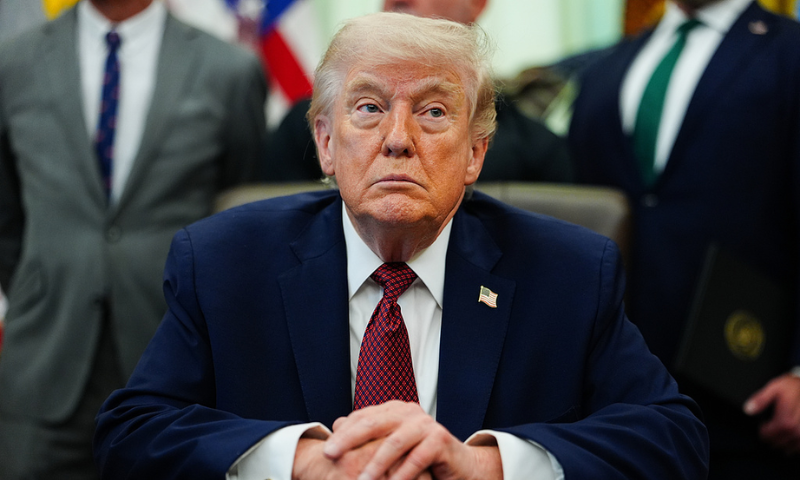
Islamabad, April 19, 2026: US President Donald Trump has confirmed that American negotiators will arrive in Islamabad on Monday evening for a second round of talks with Iran, while warning Tehran of “dire consequences” if it rejects a proposed peace deal with United States.
In a post on Truth Social, Trump said, “My representatives are going to Islamabad… for negotiations,” adding that Washington was offering a “fair and reasonable deal.” However, he coupled the announcement with strong rhetoric, threatening to target Iran’s critical infrastructure, including power plants and bridges, if the agreement is not accepted.
The US president also accused Iran of violating a ceasefire by firing on vessels near the strategically vital Strait of Hormuz, a key global oil transit route. At least two ships reportedly came under fire while approaching the strait, further escalating tensions.
Conflicting reports have surfaced regarding the composition of the US delegation. According to Axios, senior figures including Jared Kushner and special envoy Steve Witkoff are expected to participate. Meanwhile, NBC News reported that Vice President JD Vance—who led the first round of talks—may again head the delegation.
Security tightened in capital
An advance US team has already arrived in Islamabad, with additional foreign delegations expected ahead of the high-stakes talks. Authorities have placed the federal capital and nearby Rawalpindi on high alert, sealing the Red Zone and implementing stringent security measures.
The current crisis traces back to February 28, when joint military actions by the United States and Israel triggered a broader regional conflict. Iran subsequently restricted access to the Strait of Hormuz and launched retaliatory strikes against US and Israeli targets across the Gulf.
Following a ceasefire reportedly facilitated by Prime Minister Shehbaz Sharif, both sides held initial negotiations in Islamabad last week. While those talks covered a wide range of disputes, they stopped short of producing a comprehensive agreement.
Pakistan has continued diplomatic efforts to bridge differences, including a recent visit by Chief of Army Staff Asim Munir to Tehran, where he met Iran’s political and military leadership.
Despite some progress, Iranian officials indicate that significant gaps remain. Mohammad Bagher Ghalibaf stated that negotiations have moved forward but cautioned that “many gaps and fundamental points remain,” adding that the parties are still far from a final agreement.
Meanwhile, developments around the Strait of Hormuz continue to influence global markets. Oil prices had briefly declined and stock markets rallied after Iran initially signaled reopening the waterway, but renewed tensions have reintroduced uncertainty.
The upcoming round of talks in Islamabad is being closely watched as a potential turning point in efforts to de-escalate the conflict and achieve a durable peace agreement.