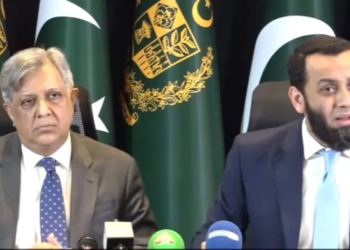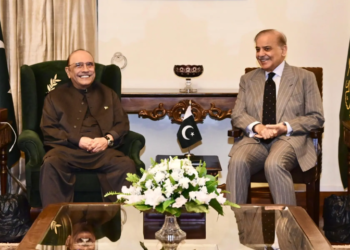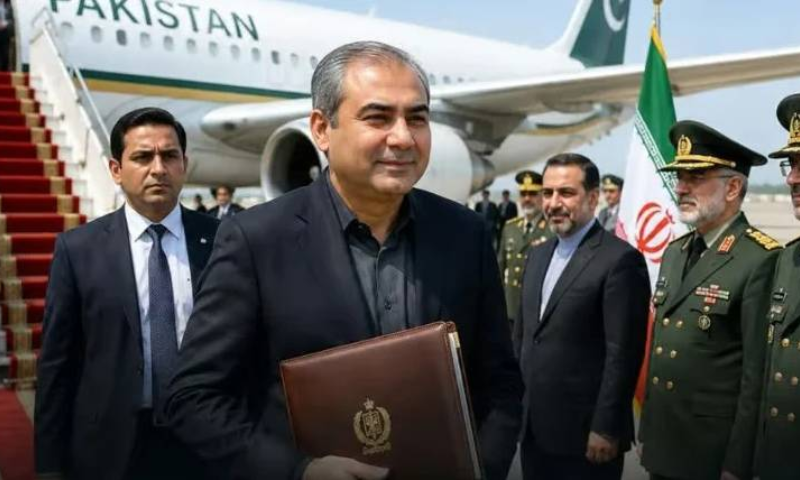
Islamabad/Tehran, May 20, 2026: Pakistan’s Interior Minister Mohsin Naqvi travelled to Tehran on Wednesday for meetings with senior Iranian officials amid escalating regional tensions involving Iran, the United States and Israel.
According to Iran’s state-run Islamic Republic News Agency (IRNA), Naqvi departed for Tehran to hold discussions with Iranian authorities. The visit marks his second trip to Iran in less than a week.
During his previous visit, Naqvi held meetings with Iranian President Masoud Pezeshkian, Foreign Minister Abbas Araghchi, Parliament Speaker Mohammad Bagher Ghalibaf and Interior Minister Eskandar Momeni.
Iranian media reported that Naqvi held a nearly 90-minute private meeting with President Pezeshkian at the Presidential Administration complex in Tehran.
During the discussions, President Pezeshkian praised what he described as the responsible cooperation of Pakistan, Afghanistan and Iraq in preventing their territories from being used for armed operations against Iran. He also commended Pakistan’s diplomatic efforts during recent regional tensions, particularly the role played by the country’s political and military leadership in supporting ceasefire stabilisation efforts.
The visit comes amid heightened tensions in the Gulf region and renewed warnings exchanged between Washington and Tehran.
Iran’s Revolutionary Guards warned that any renewed attacks by the US or Israel would lead to a broader regional conflict extending “far beyond the region.” The warning followed remarks by US President Donald Trump suggesting Washington could resume strikes on Iran if no agreement on a lasting settlement is reached within days.
Meanwhile, Iranian Foreign Minister Abbas Araghchi warned that any “return to war will feature many more surprises.”
Diplomatic efforts to prevent renewed hostilities have intensified, with US Vice President JD Vance expressing cautious optimism about ongoing negotiations with Tehran aimed at ending the conflict.
In a separate development, Pakistan’s Permanent Representative to the United Nations, Asim Iftikhar Ahmad, condemned recent drone attacks targeting the Barakah Nuclear Power Plant in the United Arab Emirates and attacks against Saudi Arabia during a meeting of the United Nations Security Council.
Pakistan expressed full solidarity with both countries and reiterated support for their sovereignty and territorial integrity.
The statement came after Director General of the International Atomic Energy Agency, Rafael Grossi, warned that a direct attack on the Barakah nuclear facility could result in a “very high release of radioactivity” and trigger severe regional consequences.
The conflict, which began earlier this year, has severely disrupted global energy supplies and shipping routes, particularly through the strategically vital Strait of Hormuz, a major transit route for global oil exports.
Amid tentative signs of de-escalation, shipping data showed two Chinese oil tankers successfully exiting the Strait of Hormuz on Wednesday, raising hopes that diplomatic efforts could eventually stabilize the situation.